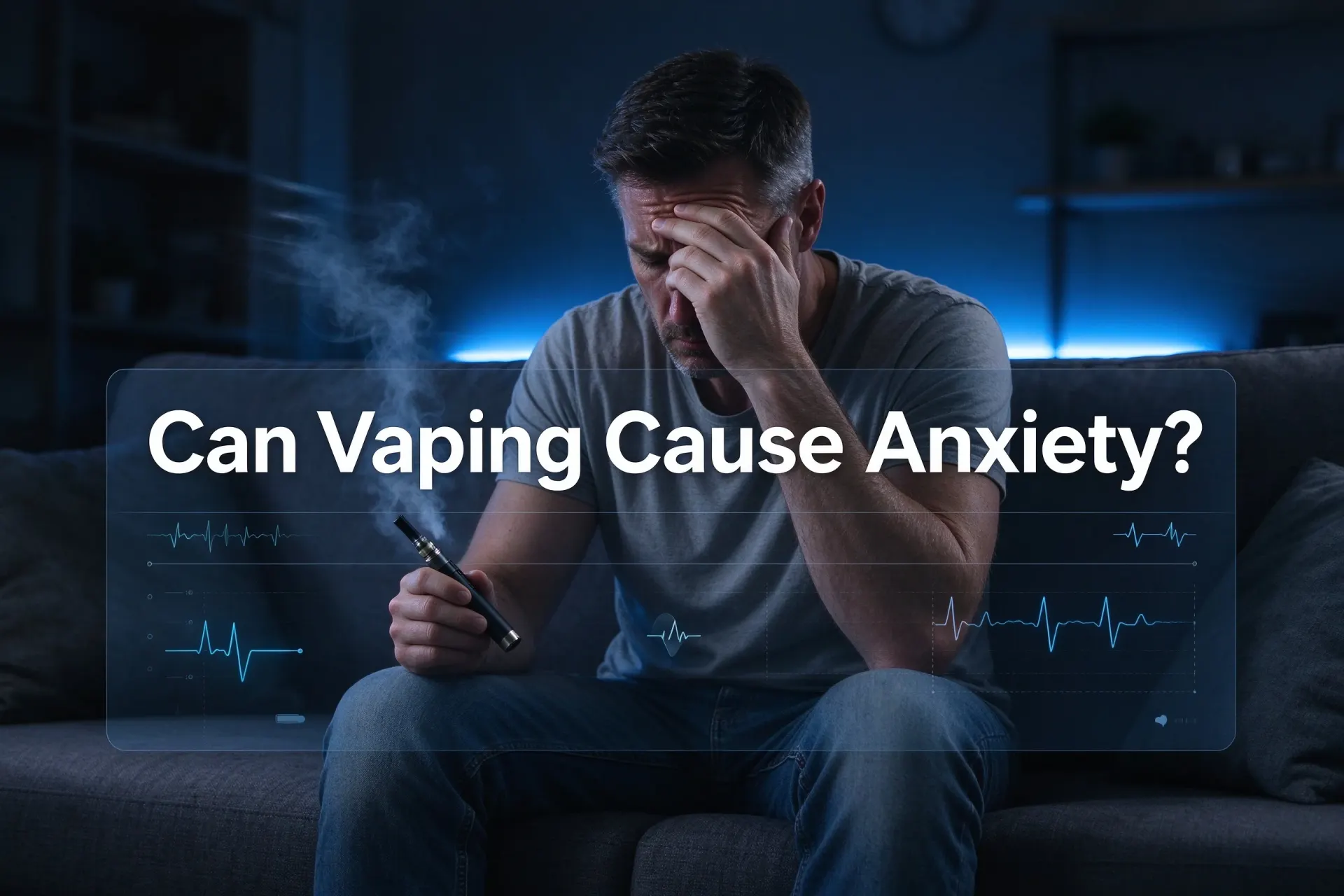

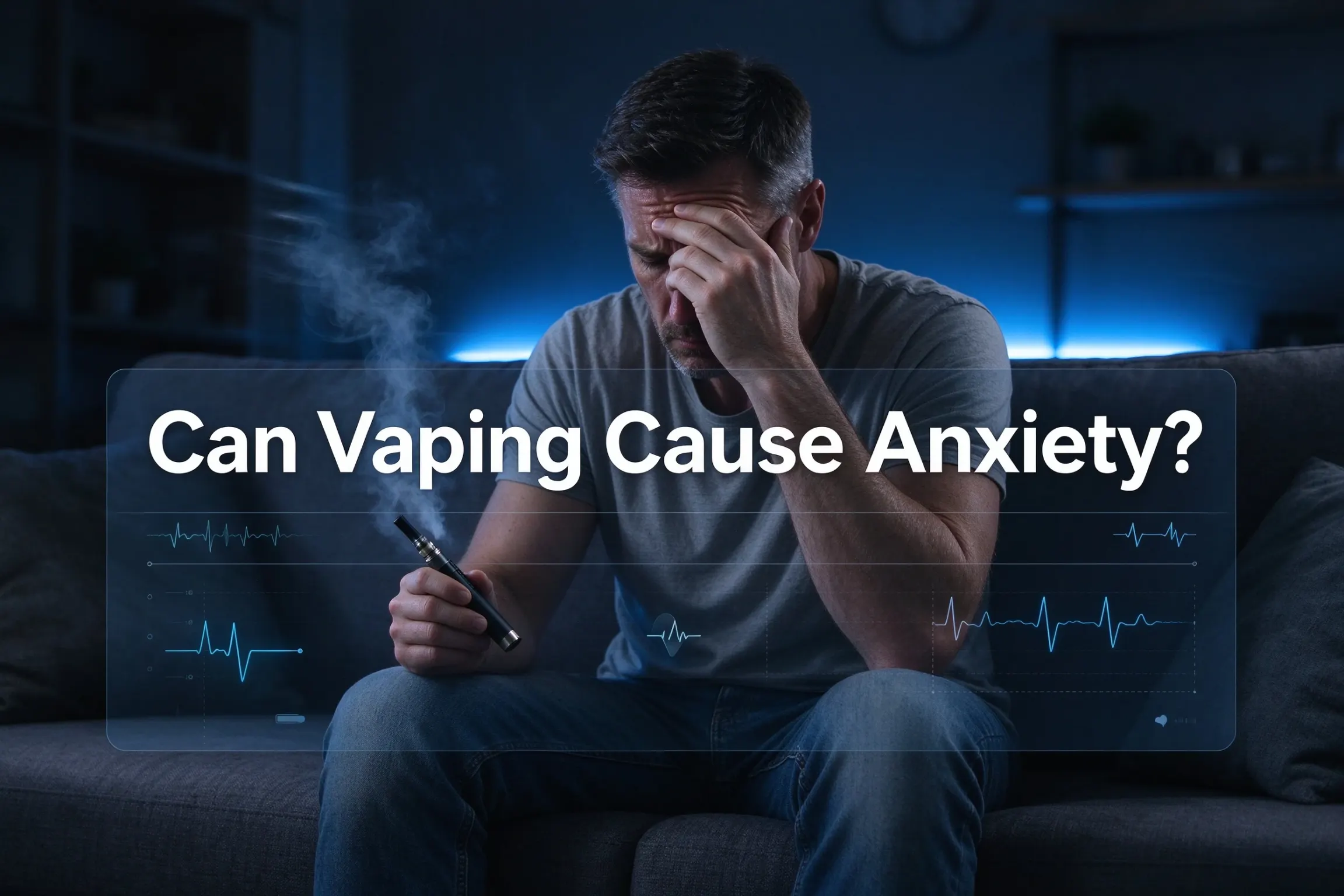
Ever noticed that you feel a little on edge after vaping? You're not alone. Nicotine can affect your heart rate and nervous system, sometimes leaving you feeling jittery rather than relaxed. But can vaping actually cause anxiety, or is something else going on?
At SKE, we're taking a closer look at how vaping and nicotine may affect your mood, why some people feel calmer after a puff, and what you can do if vaping seems to be making your anxiety worse.
How Does Nicotine Affect Anxiety?
To understand the connection between vaping and anxiety, it helps to understand what nicotine does inside the body.
1. Nicotine stimulates your nervous system
Nicotine activates receptors in the brain and triggers the release of several chemical messengers. It can increase alertness, heart rate, and blood pressure.
For some people, these effects may feel like a sudden rush. For others, particularly those sensitive to stimulants, they may feel uncomfortable.
Possible symptoms include:
- A racing or pounding heartbeat
- Restlessness or feeling on edge
- Shakiness or jitteriness
- Difficulty relaxing
- Increased awareness of normal bodily sensations, which may itself trigger worry
These symptoms can resemble anxiety or panic. However, they are not specific to vaping, and other medical or psychological causes are possible.
2. Nicotine withdrawal can make you anxious
Nicotine levels decline between vaping sessions. If your body has become dependent on nicotine, this decline can trigger withdrawal symptoms.
Common symptoms include:
- Anxiety or nervousness
- Irritability and frustration
- Strong cravings
- Trouble sleeping
- Difficulty concentrating
- Low mood or restlessness
The CDC explains that these symptoms are generally temporary as the brain adjusts to being without nicotine. Their intensity and duration vary depending on the individual and the level of dependence.
This creates a frustrating cycle: you feel anxious, reach for your vape, experience temporary relief, and then feel anxious again when nicotine levels fall.
3. Vaping can become a response to stress
Some people start vaping because they feel stressed, anxious, or overwhelmed. Over time, the brain can associate vaping with relief, making the urge to vape stronger whenever difficult emotions appear.
The problem is that this association does not necessarily address the underlying cause of the anxiety.
A stressful workday, a looming deadline, or an unexpected bill will not magically disappear because you take a puff. Your brain may temporarily associate vaping with comfort, but that is different from treating anxiety itself.
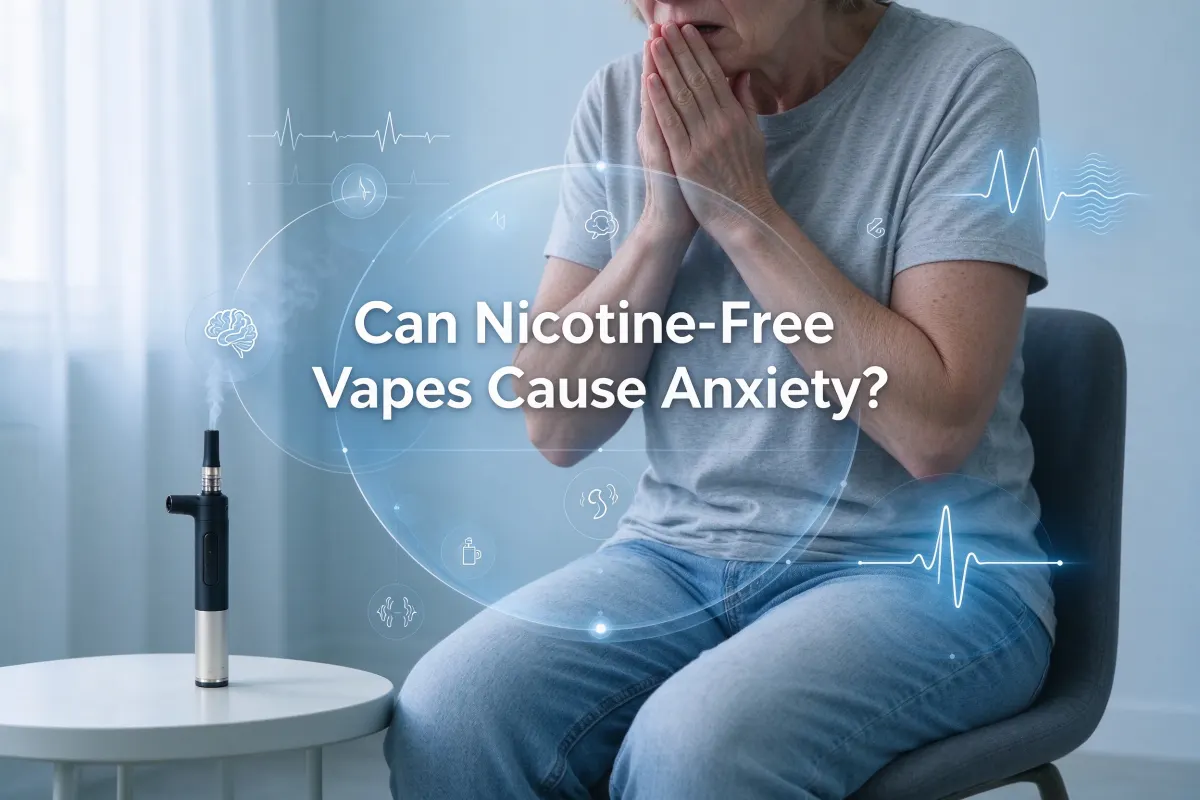
Can Nicotine-Free Vapes Cause Anxiety?
Nicotine-free vapes are less likely to cause anxiety through nicotine's direct stimulant effects, but that does not mean they are completely risk-free or that anxiety is impossible.
There are several reasons someone might still feel anxious while using a nicotine-free vape:
- Existing anxiety: work stress, sleep deprivation, and other factors may be responsible.
- Behavioral associations: if you regularly reach for a vape when stressed, the habit may remain linked to anxious feelings even without nicotine.
- Other ingredients or reactions: inhaled aerosol can cause unwanted physical effects, and individual responses vary.
- Uncertain product contents: a label alone may not always reliably establish what a product contains.
The CDC notes that e-cigarette aerosol may contain potentially harmful substances and that the long-term health effects of vaping are not fully understood.
If anxiety consistently occurs after using a nicotine-free product, stop using it and discuss the symptoms with a healthcare professional. Switching to a product advertised as nicotine-free is not a guaranteed solution.
Does Vaping Help With Anxiety or Make It Worse?
This is where things can get confusing. Some people genuinely feel calmer after vaping, so why do health authorities warn that nicotine may worsen anxiety?
The answer often comes down to the difference between short-term relief and long-term effects.
| What you experience | What may be happening |
|---|---|
| You feel calmer immediately after vaping | Nicotine may temporarily relieve withdrawal discomfort or become associated with a familiar calming routine. |
| You feel anxious when you cannot vape | Nicotine withdrawal or cravings may be contributing to the discomfort. |
| You feel jittery after repeated puffs | Nicotine's stimulating effects may be playing a role. |
| You feel anxious even when vaping regularly | Anxiety may have another cause, or nicotine use may be contributing to it. |
The US government's Smokefree resources explain that stress and anxiety can trigger vape cravings, while withdrawal during quitting can temporarily increase anxiety and irritability.
This does not mean that everyone who vapes will develop an anxiety disorder. It means that relying on nicotine to manage difficult emotions can create a cycle that makes those emotions harder to manage independently.
At SKE, we believe health information should be clear about this distinction: temporary relief does not necessarily mean a product is treating the underlying problem.
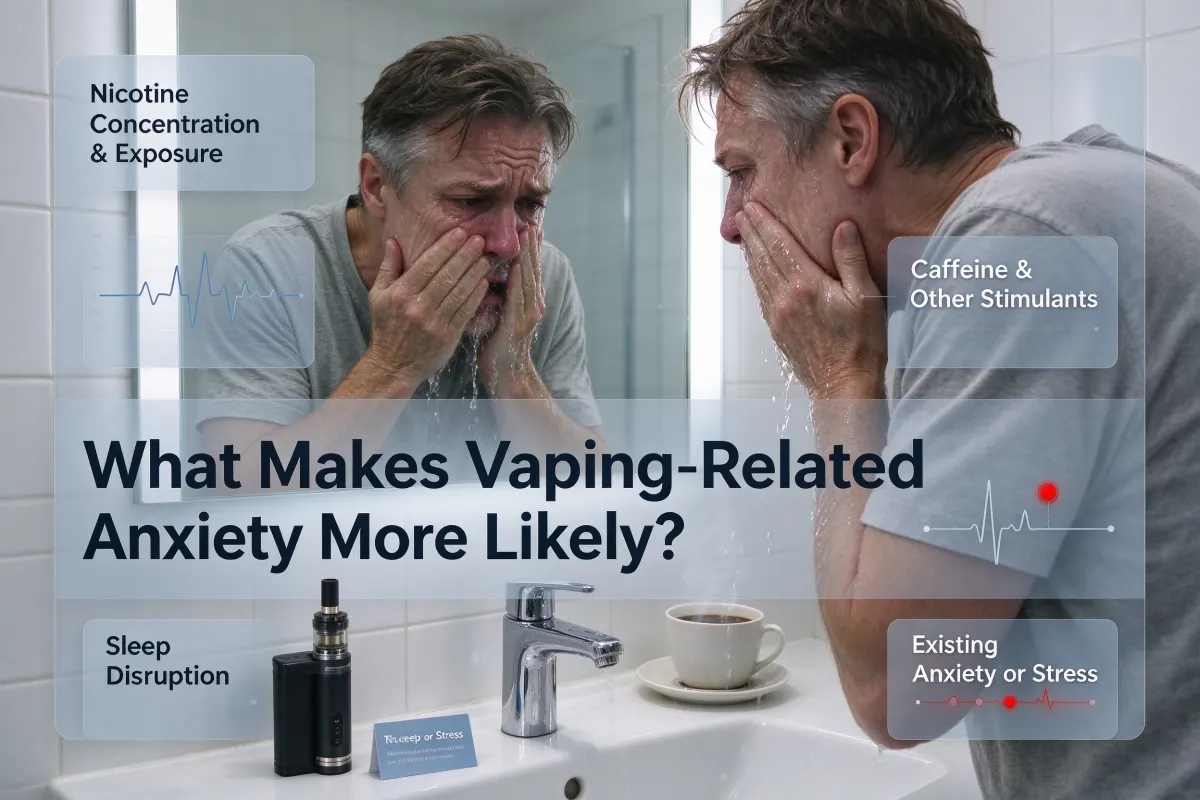
What Makes Vaping-Related Anxiety More Likely?
Not everyone responds to nicotine in the same way. Several factors may influence whether vaping contributes to anxiety symptoms.
1. Nicotine concentration and exposure
Higher nicotine exposure may produce more pronounced stimulant effects in some people. Frequent use can also increase dependence, although the amount absorbed varies by device, liquid, and vaping behavior.
2. Caffeine and other stimulants
Coffee, energy drinks, and other stimulants can contribute to jitteriness or anxiety in susceptible people. Smokefree guidance specifically recommends considering caffeine intake when managing anxiety during vaping cessation.
3. Sleep disruption
Difficulty sleeping can make it harder to regulate emotions and cope with everyday stress. Nicotine-related stimulation or withdrawal may contribute to sleep problems.
4. Existing anxiety or stress
People with pre-existing anxiety may be more sensitive to physical sensations such as a racing heart. Anxiety can also motivate vaping, making it difficult to determine which came first.
How to Reduce Anxiety If You Vape
If you suspect vaping is contributing to your anxiety, you do not need to solve everything at once. Start by identifying patterns and choosing practical steps.
- Track when symptoms occur. Record when you vape, approximate nicotine strength, caffeine intake, sleep quality, and when anxiety starts. This can help you identify possible triggers.
- Take a break from vaping. If symptoms occur immediately after vaping, stop using the product. If you are nicotine-dependent, withdrawal may initially make anxiety worse, so plan for support rather than interpreting early discomfort as proof that quitting is harmful.
- Reduce caffeine if it makes you jittery. Try cutting back on coffee, energy drinks, and other caffeinated beverages, especially if they coincide with anxiety symptoms.
- Use alternative coping strategies. Slow breathing, gentle exercise, regular meals, sufficient sleep, and talking to someone you trust can help you manage stress without relying on nicotine.
- Get support to quit. A healthcare professional or smoking-cessation service can help you develop a plan. Depending on your circumstances, they may discuss behavioral support or appropriate cessation treatments.
- Seek professional help for persistent anxiety. If anxiety is severe, keeps returning, interferes with daily life, or does not improve, consult a healthcare professional rather than assuming vaping is the only explanation.
The CDC notes that nicotine withdrawal symptoms generally ease as the brain adjusts to functioning without nicotine. Smokefree also recommends getting professional help when anxiety is extreme or persistent.
One important distinction: if you currently smoke cigarettes and use vaping to move away from smoking, discuss the safest cessation approach with a healthcare professional before making changes that could lead you back to smoking. Vaping is not harmless, but returning to combustible cigarettes is not a recommended solution to nicotine-related anxiety.
Conclusion
So, can vaping cause anxiety? It certainly can, especially if your vape contains nicotine. While a quick puff might feel relaxing in the moment, nicotine can leave you feeling restless or anxious as its effects wear off. That doesn't mean vaping is the cause of everyone's anxiety, but if you notice a pattern, it's worth paying attention.
Cutting back on caffeine, getting enough sleep, and seeking support to manage nicotine dependence may help. And if anxiety keeps getting in the way of everyday life, don't hesitate to speak to a healthcare professional.
FAQs
1. How do I know if vaping is causing my anxiety?
Look for a recurring pattern. If anxiety, a racing heartbeat, or restlessness tends to appear after vaping, nicotine may be contributing. Symptoms that occur when you go without vaping may also be related to withdrawal. However, timing alone cannot confirm the cause, so consult a healthcare professional if symptoms persist.
2. Can vaping cause anxiety even if I have never had anxiety before?
Yes, it is possible. Nicotine can cause physical symptoms that feel like anxiety, and nicotine dependence or withdrawal may contribute to new or worsening symptoms. However, anxiety can develop for many reasons, so vaping should not automatically be assumed to be the cause.
3. How long does anxiety last after quitting vaping?
There is no single timeline that applies to everyone. Nicotine withdrawal symptoms can begin after stopping, may be most noticeable during the early days, and generally improve over time. The duration depends on factors such as nicotine dependence and individual circumstances. If anxiety remains severe or persistent, seek professional advice rather than assuming it is withdrawal.
4. Does vaping without nicotine help with anxiety?
Not necessarily. Nicotine-free vaping avoids nicotine's direct effects, but it is not an established treatment for anxiety. Stress, learned habits, and other factors can still influence how you feel. Evidence-based anxiety treatments and healthier coping strategies are more appropriate ways to address persistent symptoms.
5. Should I stop vaping if it makes me anxious?
If you notice anxiety repeatedly after vaping, stop using the product and seek medical advice if symptoms continue or are concerning. If you are dependent on nicotine, withdrawal may temporarily increase anxiety, so cessation support can help you manage the transition. Anyone experiencing severe symptoms, such as chest pain or significant breathing difficulties, should seek urgent medical attention.
References
[1] Centers for Disease Control and Prevention (CDC) — Health Effects of Vaping
[2] American Heart Association (AHA) — What to Know About Smoking, Nicotine and Vaping
[3] Smokefree.gov — Stress, Anxiety, and Vaping
[4] National Health Service (NHS) — Vaping to Quit Smoking