

If you’ve ever taken a puff and suddenly thought, “Why does my chest hurt?”, you’re probably not going to feel reassured by the fact that your vape still looks perfectly innocent sitting on the desk.
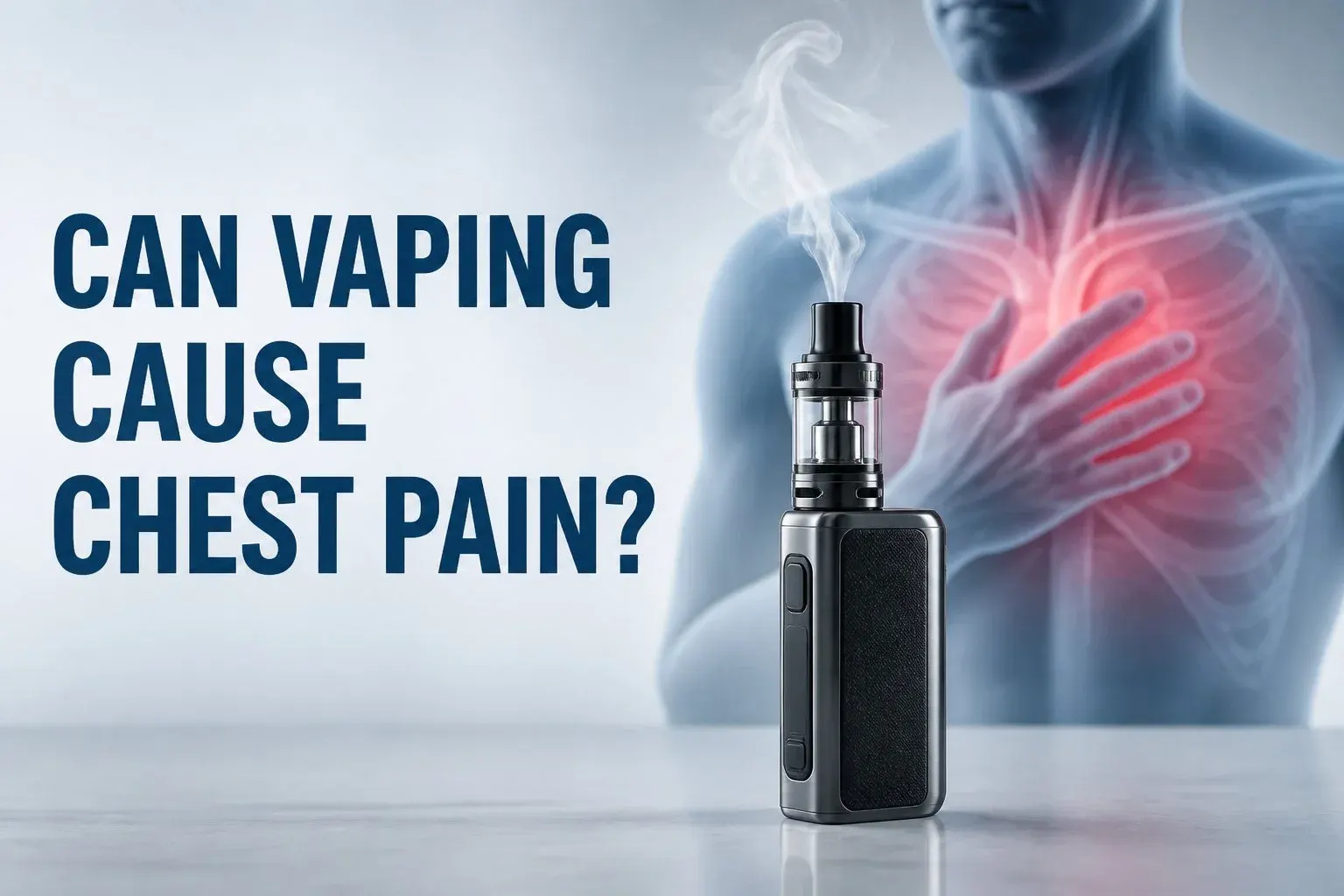
So, can vaping cause chest pain? Yes, it can be associated with chest pain or chest discomfort, although that doesn't mean every episode of chest pain after vaping was caused by the vape. Chest pain has many possible causes, ranging from irritation and inflammation to cardiovascular or respiratory problems.
I’ve looked into this question because it’s one of those vaping topics where the internet tends to swing between “It’s nothing” and “Your lungs are packing their bags.” The reality is more complicated.
Why Might Vaping Make Your Chest Hurt?
There isn't one universal explanation. A few possibilities are worth knowing.
1. Airway irritation
Vape aerosol isn't simply harmless water vapor. E-cigarettes can expose the respiratory system to nicotine, flavorings, propylene glycol, vegetable glycerin and other substances.
Some people experience coughing, throat irritation or shortness of breath after vaping. The NHS lists coughing, dry mouth and throat, mouth and throat irritation, shortness of breath and headaches among reported vaping side effects.
If your airways become irritated, that can potentially feel like burning, tightness or discomfort in the chest.
In my experience writing about vaping, this is one of the easiest explanations to overlook because people often assume that if the pain is in the chest, it must be coming directly from the heart.
Bodies, unfortunately, didn't design themselves with helpful labels.
2. Nicotine
Nicotine is another factor worth considering.
Many vapes deliver nicotine, which is an addictive stimulant. It can increase heart rate and blood pressure and may produce sensations such as a racing heartbeat or palpitations.
If chest discomfort repeatedly appears after vaping, particularly after using a high-nicotine product or taking a lot of puffs in a short period, it's sensible to stop vaping and discuss the symptoms with a healthcare professional rather than simply switching to a different flavor.
3. Respiratory inflammation or lung injury
More serious respiratory problems can also involve chest pain.
EVALI became particularly prominent during the 2019 U.S. outbreak. According to CDC clinical guidance, patients with EVALI commonly presented with respiratory symptoms including cough, chest pain and shortness of breath. Many also experienced gastrointestinal and constitutional symptoms such as nausea, vomiting, fever or chills.
Importantly, EVALI is a diagnosis doctors make after considering and excluding other possible causes. Chest pain alone is not enough to diagnose it.
4. Something unrelated to vaping
This is the big one.
If chest pain happens after vaping, it's tempting to blame the vape immediately. But correlation isn't proof of causation.
Heart conditions, acid reflux, muscle strain, respiratory infections, anxiety and other medical problems can all cause chest discomfort.
That's why persistent or unexplained chest pain deserves proper medical assessment.
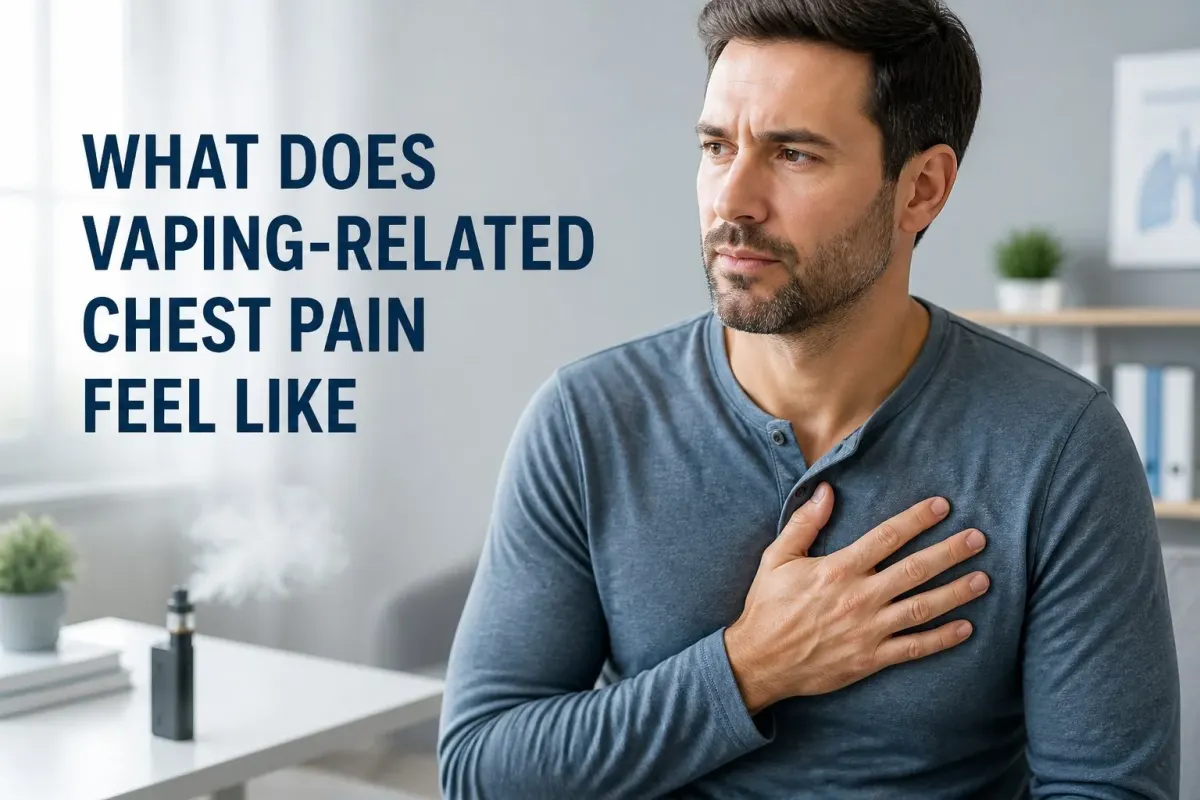
What Does Vaping-Related Chest Pain Feel Like?
There's no single "vape chest pain" sensation.
People may describe chest discomfort as:
- Tightness or pressure
- Burning
- Aching
- A sharp or stabbing sensation
- Pain when breathing deeply
- A feeling of heaviness
- General chest discomfort accompanied by coughing or shortness of breath
The specific sensation isn't enough to determine the cause.
For example, chest pain combined with coughing and breathing difficulty could point toward a respiratory problem, while pressure accompanied by sweating, nausea or pain spreading to the arm or jaw requires urgent attention.
In other words, don't play medical detective with a vape in one hand and Google in the other.
When Is Chest Pain After Vaping an Emergency?
This is the part I wouldn't joke about.
Seek emergency medical help if you have sudden or severe chest pain, particularly if it doesn't go away or occurs with other concerning symptoms.
The NHS advises calling emergency services for sudden chest pain or discomfort that doesn't go away, particularly when it feels like squeezing or pressure or is accompanied by symptoms such as sweating, nausea, light-headedness or shortness of breath.
You should also take symptoms seriously if chest pain occurs alongside:
- Significant difficulty breathing
- Fainting or severe dizziness
- A very fast or irregular heartbeat
- Confusion
- Bluish or gray lips or skin
- Severe weakness
- Pain spreading to the arm, neck, jaw, back or stomach
These symptoms aren't something to troubleshoot by changing your e-liquid.
Should You Stop Vaping If It Causes Chest Pain?
If you consistently experience chest pain or unusual chest discomfort after vaping, stop vaping and seek medical advice rather than assuming the symptom will disappear if you simply change devices or flavors.
The American Lung Association emphasizes that the long-term health effects of e-cigarettes are still being studied and that evidence indicates potential risks to lung health.
If you're using vaping as an alternative to smoking, there's another important consideration: don't automatically return to combustible cigarettes without getting professional advice. A healthcare professional can help you choose an appropriate smoking-cessation strategy.
Can Chest Pain From Vaping Go Away?
It can, depending on what is causing the discomfort.
For example, temporary irritation may improve after stopping the exposure. But the fact that chest pain disappears doesn't prove that vaping was harmless or that there wasn't another underlying cause.
The NHS recommends seeking medical advice for chest pain that comes and goes, as well as pain that goes away quickly but remains concerning.
If the symptom keeps returning every time you vape, that's an especially good reason to stop and get it checked.
Does Vaping Cause Heart Problems?
Vaping and cardiovascular health is an area of ongoing research, and it would be misleading to suggest that every episode of chest pain in a vaper represents heart disease.
What we can say is that nicotine affects the cardiovascular system, while e-cigarette aerosol exposes users to substances that aren't risk-free. The American Lung Association notes that evidence about the health effects of e-cigarettes continues to develop and that concerns extend beyond the lungs.
So if you're experiencing recurring chest pain, don't assume you're simply having a "nicotine reaction." Get it evaluated.
What Should You Do If Your Chest Hurts After Vaping?
My practical advice is pretty simple: Stop vaping when the pain occurs.
Then pay attention to what happens next.
If the pain is severe, persistent, or accompanied by difficulty breathing, fainting, sweating, nausea, or pain spreading elsewhere, seek emergency medical care.
If it's mild but keeps happening, arrange a medical evaluation. Tell the clinician that you vape and explain what type of product you use, how frequently you use it and when the symptoms started.
That information can actually be useful. Don't leave the vape history out because you're worried about being judged. Your doctor needs the complete picture, not the edited-for-Instagram version.
Conclusion
If your chest hurts after vaping, don’t just blame the vape and move on. It could be irritation, nicotine, or something completely unrelated. Your chest isn't exactly famous for sending detailed error messages.
If the pain keeps coming back, get it checked. And if it’s severe or comes with trouble breathing, dizziness, or other worrying symptoms, don’t wait around.
Your vape can wait. Your chest gets priority.
FAQs
1. Can vaping cause chest pain and shortness of breath?
Yes. Chest pain and shortness of breath have both been reported among people experiencing vaping-related respiratory problems, including EVALI. However, these symptoms can have many other causes, so they shouldn't automatically be attributed to vaping.
2. Why does my chest hurt after I vape?
Possible explanations include airway irritation, nicotine effects, inflammation or another respiratory problem. Chest pain can also be unrelated to vaping, so recurring or unexplained symptoms should be evaluated by a healthcare professional.
3. Can vaping cause chest tightness?
It can be associated with chest tightness or discomfort, particularly when respiratory irritation or other adverse effects are involved. However, chest tightness can also occur with heart, lung, digestive or anxiety-related conditions.
4. Should I stop vaping if my chest hurts?
Yes. If chest pain occurs after vaping, it's sensible to stop using the product and assess the symptoms. If the pain keeps returning, seek medical advice. Severe or persistent chest pain, especially with shortness of breath, sweating, nausea, dizziness or pain spreading to other parts of the body, requires urgent medical attention.
5. Is chest pain a sign of EVALI?
Chest pain can be a symptom of EVALI, but chest pain alone does not mean you have EVALI. CDC guidance explains that EVALI requires medical evaluation and consideration of other possible diagnoses.
References
[1] NHS — Vaping to Quit Smoking
[2] American Lung Association — E-Cigarettes and Lung Health