

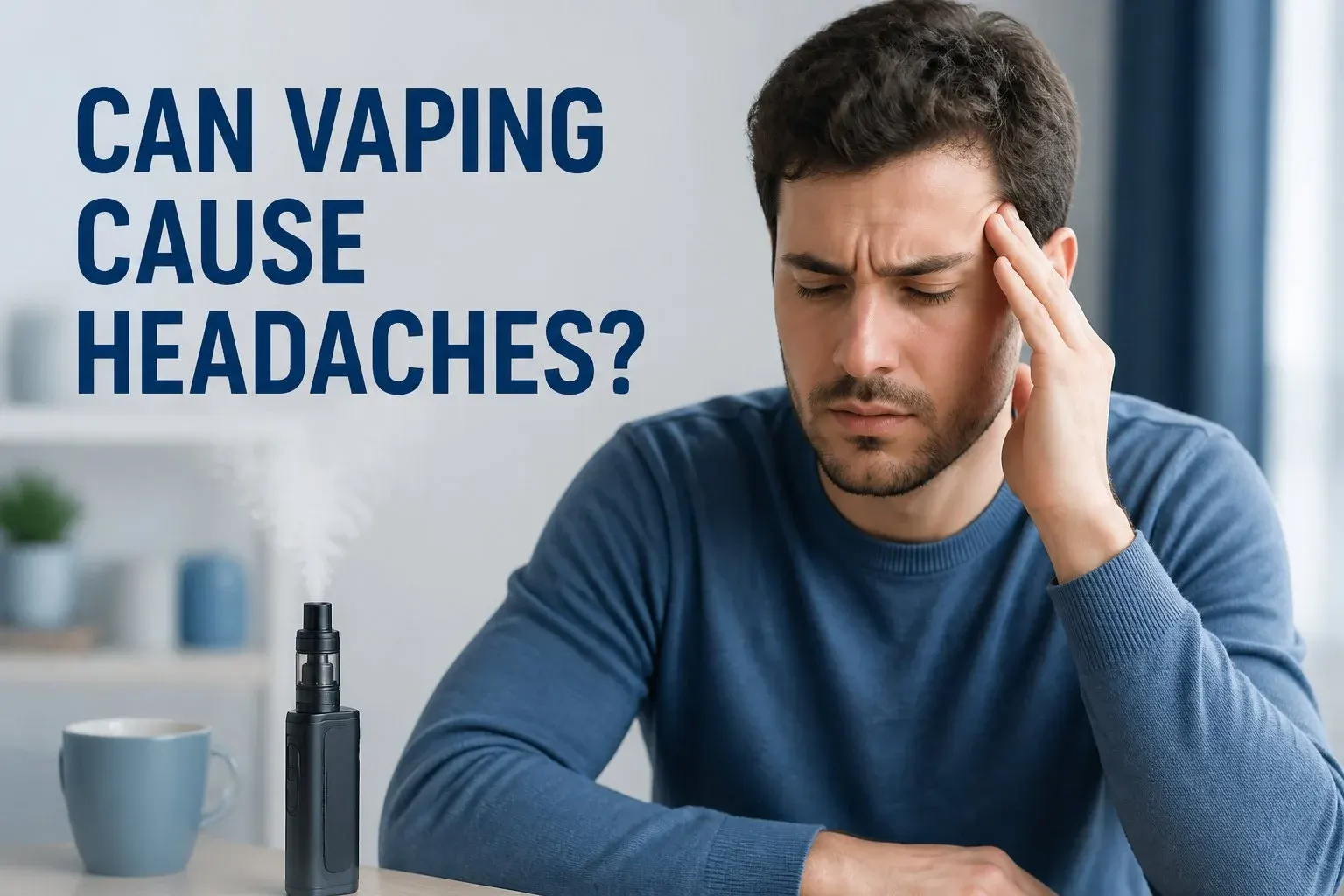
If you’ve ever finished a few pulls on your vape and suddenly thought, “Why does my head hurt?”, you’re definitely not imagining it.
So, can vaping cause headaches? Yes, vaping can be associated with headaches in some people. The most obvious suspect is nicotine, particularly when you’re using a high-nicotine vape or taking more puffs than usual. But nicotine isn’t always the whole story. Dehydration, nicotine withdrawal, and individual sensitivity can also play a part.
I’ve looked into this question because it comes up surprisingly often in vape discussions. And, as usual, the answer is slightly less exciting than blaming the vape for absolutely everything.
Here’s what you should know.
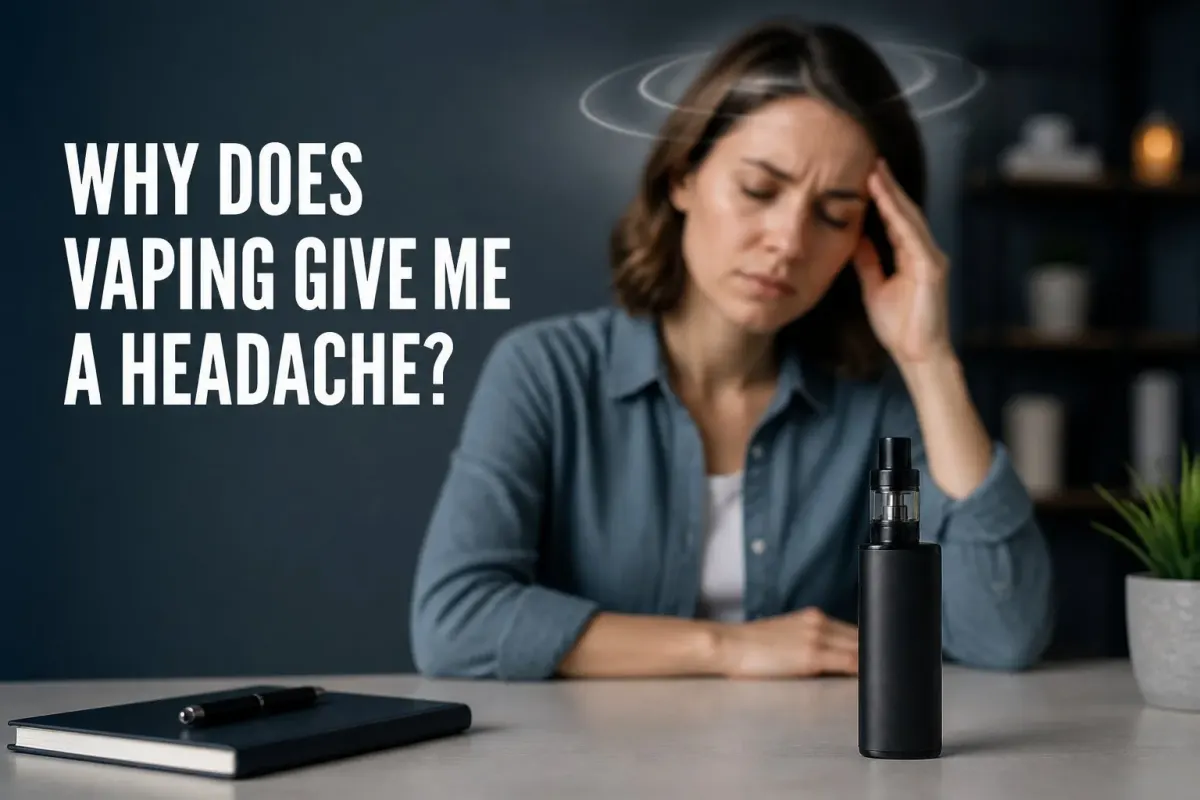
Why Does Vaping Give Me a Headache?
1. You’re Getting Too Much Nicotine
This is probably the first thing I would investigate.
Nicotine affects the nervous system and cardiovascular system. If you suddenly consume more nicotine than you're used to, you may experience symptoms such as headache, dizziness, nausea, sweating or a racing heartbeat.
This can happen particularly easily with modern high-strength or high-puff-count products. Taking repeated puffs over a short period can mean you're consuming more nicotine than you realize.
One important distinction: a headache alone doesn't prove nicotine poisoning.
If a headache comes with significant nausea, vomiting, dizziness, sweating, confusion, tremors, abnormal heartbeat, breathing difficulties or seizures, that's a much bigger concern. Nicotine poisoning can become serious and requires prompt medical attention.
2. You’re Vaping More Than Usual
Sometimes the problem isn't necessarily the vape itself. It's the pattern of use.
For example, perhaps you've switched to a stronger device, started using a new disposable, or simply found yourself reaching for your vape every few minutes.
More frequent use can increase your overall nicotine exposure.
I've found that this is an easy detail to overlook because vaping doesn't always feel like a traditional "dose." You take a puff, carry on with your day, take another puff, and suddenly you've been doing it for an hour.
Your brain, unfortunately, does keep score.
3. You Might Be Dehydrated
Dehydration is another possible contributor to headaches.
Harvard Health explains that insufficient fluid intake can cause dehydration-related headaches.
This doesn't mean vaping automatically dehydrates everyone or that every vape-related headache is caused by dehydration. But if you're spending hours vaping, drinking very little water, and living largely on coffee or energy drinks, dehydration becomes a pretty reasonable suspect.
A simple glass of water is certainly cheaper than conducting a forensic investigation into your vape.
4. You Could Be Sensitive to Vaping or Its Ingredients
E-cigarette aerosol isn't simply "water vapor."
According to the CDC, e-cigarette aerosol can contain nicotine, ultrafine particles, volatile organic compounds, flavorings and metals such as nickel, tin and lead.
Different people can react differently to particular products or ingredients. If your headache consistently starts after using one particular vape, flavor or e-liquid but not another, that's worth paying attention to.
Don't assume that changing flavors will necessarily solve the problem, though. There isn't enough evidence to say that one particular flavoring is responsible for most vaping-related headaches.
Can Nicotine Withdrawal Cause Headaches?
It can be difficult to separate vaping headaches from nicotine withdrawal.
If you've suddenly reduced how much you vape or stopped using nicotine altogether, your body has to adjust.
The CDC lists several nicotine withdrawal symptoms, including irritability, restlessness, anxiety, sleep difficulties, difficulty concentrating, increased appetite and cravings.
Headache isn't highlighted by the CDC as one of its main withdrawal symptoms, so I wouldn't automatically blame every headache after quitting on withdrawal.
However, if you've recently changed your nicotine intake and your headaches appeared around the same time, the timing is worth discussing with a healthcare professional.
There's another wrinkle here: people sometimes vape to relieve symptoms they were already experiencing. If the headache disappears temporarily after nicotine and returns later, that doesn't necessarily mean vaping is treating the underlying problem. It may simply reflect the cycle of nicotine use and withdrawal.
What Should I Do If Vaping Gives Me a Headache?
If you develop a mild headache after vaping, the sensible first move is to stop vaping for a while and see whether it improves.
I would also:
- Drink some water.
- Avoid chain-vaping or taking repeated puffs.
- Pay attention to the nicotine strength of the product.
- Get some fresh air and rest.
- Avoid adding more nicotine while you're already feeling unwell.
- Keep track of whether the headache repeatedly occurs after vaping.
Don't immediately assume that switching to another vape is the solution. If vaping consistently triggers headaches, the more useful question is why it's happening, not simply which device gives you the least annoying headache.
When Should I Be Concerned About a Headache After Vaping?
Most headaches aren't emergencies. However, a headache accompanied by significant nicotine-exposure symptoms deserves more attention.
Poison Control lists symptoms such as nausea, vomiting, dizziness, sweating, confusion, abnormal heart rate and seizures among signs of nicotine toxicity. Severe poisoning can cause breathing problems, heart problems, seizures, coma and death.
Seek urgent medical attention if you experience a severe or sudden headache, especially if it comes with:
- Difficulty breathing
- Fainting or severe confusion
- Seizures
- Severe or persistent vomiting
- Significant chest pain
- Severe weakness
- A very rapid or abnormal heartbeat
- Other sudden neurological symptoms
And if you believe you've inhaled or otherwise been exposed to too much nicotine, don't try to diagnose yourself from a search result. In the U.S., Poison Control can provide immediate guidance.
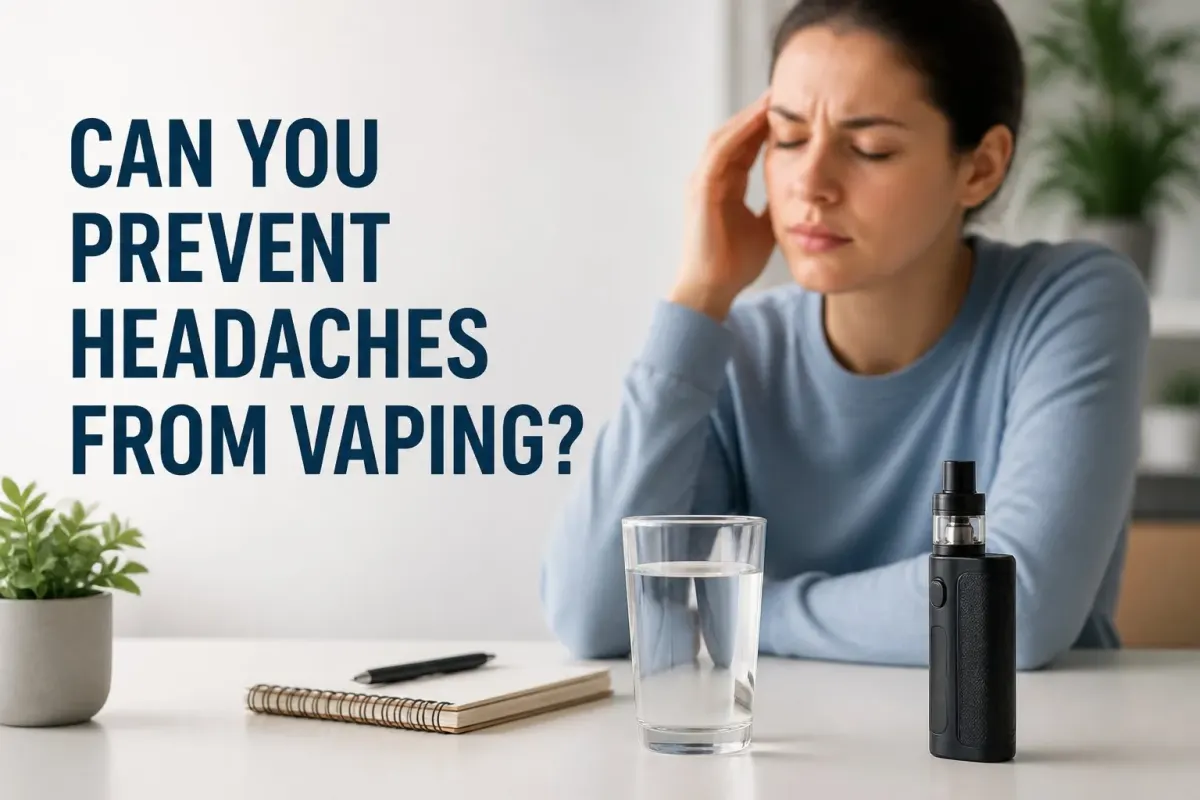
Can You Prevent Headaches From Vaping?
If vaping appears to trigger your headaches, reducing or stopping nicotine exposure is the most straightforward approach.
For someone who continues to use nicotine, paying attention to nicotine strength and avoiding excessive, rapid vaping may reduce the chance of unpleasant symptoms. Staying adequately hydrated and maintaining regular sleep and eating patterns can also help because dehydration, sleep changes and other lifestyle factors can independently trigger headaches. The National Institute of Neurological Disorders and Stroke lists dehydration and changes in eating and sleep patterns among possible headache triggers.
However, there isn't a magic "headache-proof" vape.
If the headaches continue even after you stop vaping, or they are becoming more frequent or severe, it's worth speaking with a healthcare professional rather than assuming vaping is responsible.
Conclusion
If someone asks me, "Can vaping cause headaches?", my answer is yes—but I'd add an important asterisk.
Nicotine is the first thing I'd consider, particularly if you're using a high-strength product, vaping frequently, or experiencing other symptoms such as dizziness or nausea. Excessive nicotine exposure can produce headache and other symptoms of toxicity.
But headaches are complicated. Dehydration, poor sleep, stress, caffeine, skipped meals, nicotine withdrawal and plenty of unrelated health issues can all be involved.
So don't automatically blame your vape every time your forehead starts complaining.
If the pattern is consistent—vape → headache → stop vaping → headache improves—that's useful information. If it keeps happening, take it seriously and consider talking to a healthcare professional.
And remember: e-cigarettes aren't risk-free. The CDC states that no tobacco products, including e-cigarettes, are safe, and scientists are still studying their short- and long-term health effects.
FAQs
1. Can vaping cause headaches every time I vape?
It can. If headaches consistently occur shortly after vaping, nicotine exposure or sensitivity to something in the aerosol may be contributing. However, dehydration, caffeine, lack of sleep and other headache triggers can occur at the same time, so the vape isn't necessarily the only cause.
2. Can too much nicotine cause a headache?
Yes. Headache is a recognized symptom of excessive nicotine exposure, particularly when accompanied by symptoms such as nausea, dizziness, sweating, vomiting or increased heart rate.
3. Can vaping cause headaches and dizziness?
Yes. Headache and dizziness can occur together following excessive nicotine exposure. If both symptoms appear after heavy vaping—especially with nausea, sweating, vomiting or a racing heartbeat—stop using nicotine and seek appropriate medical advice.
4. Does vaping dehydrate you and cause headaches?
Dehydration can cause headaches, but that doesn't prove vaping itself is directly responsible for dehydration in every user. If you're vaping while drinking very little water, dehydration could be one factor contributing to the headache.
5. How long does a vaping headache last?
There isn't a fixed amount of time that applies to everyone. It depends on the underlying cause, how much nicotine was consumed and the individual's sensitivity. If headaches are severe, persistent, repeatedly triggered by vaping, or accompanied by other concerning symptoms, it's better to seek medical advice rather than simply waiting for them to disappear.
References
[1] CDC — Health Effects of Vaping
[2] Harvard Health Publishing — Can Dehydration Cause Headaches
[3] National Institute of Neurological Disorders and Stroke — Headache