
I've spent years reviewing pod systems, nicotine salts, and just about every new vaping device that has hit the market. Normally, people ask me things like "Which vape lasts the longest?" or "Is this flavor worth buying?".
But every so often, someone asks a question that makes me put the product reviews aside.
"Can you vape when pregnant?"
Maybe you've just found out you're pregnant and still have a vape in your pocket. Maybe you've switched from cigarettes to vaping and are wondering if you've made the right decision. Or perhaps you're trying to help someone you care about.
Whatever brought you here, you're looking for facts—not fear.
After digging through recommendations from organizations like the Centers for Disease Control and Prevention (CDC), the American College of Obstetricians and Gynecologists (ACOG), and recent scientific research, the answer is surprisingly consistent.
No, vaping isn't considered safe during pregnancy.
That doesn't mean every person who vaped before realizing they were pregnant has harmed their baby. It also doesn't mean you should panic if you've already taken a few puffs.
What it does mean is that the sooner you stop vaping, the better the outlook for both you and your developing baby.
Let's break down why.
Why Do So Many People Think Vaping Is Safe During Pregnancy?
Honestly?
Because compared with smoking, vaping often gets described as the "less harmful" option.
That statement has some truth—but it often gets misunderstood.
Researchers generally agree that switching completely from cigarettes to vaping may reduce exposure to many toxic chemicals found in cigarette smoke.
Reduced harm doesn't mean no harm.
Imagine comparing these two scenarios:
- Walking through a thunderstorm
- Walking through a drizzle
The drizzle is certainly better.
But if your goal is staying dry, neither option is ideal.
Pregnancy works the same way.
Doctors aren't comparing cigarettes with vaping.
They're comparing vaping with not using nicotine at all.
That's why every major medical organization recommends avoiding both cigarettes and e-cigarettes during pregnancy whenever possible.
Potential Risks of Vaping During Pregnancy
While every pregnancy is different, studies suggest vaping may increase the risk of several complications.
1. Reduced Oxygen Supply
Nicotine narrows blood vessels.
When blood vessels constrict, less oxygen and fewer nutrients reach the placenta.
Think of it like partially squeezing a garden hose.
Water still flows—but not as efficiently.
A growing baby depends on a constant supply of oxygen and nutrients to develop normally.
2. Low Birth Weight
Several studies suggest nicotine exposure during pregnancy may contribute to babies being born smaller than expected.
Low birth weight can increase the likelihood of:
- Feeding difficulties
- Temperature regulation problems
- Longer hospital stays
- Developmental concerns later in life
3. Premature Birth
Some research indicates nicotine exposure may raise the chance of delivering before 37 weeks.
Premature babies often require additional medical care because their lungs and other organs may not be fully developed.
4. Brain Development Concerns
This is the issue medical experts emphasize most.
The fetal brain develops throughout pregnancy.
Nicotine can interfere with the formation of neural connections, potentially affecting:
- Attention
- Memory
- Learning
- Impulse control
Scientists are still studying the exact degree of risk, but current evidence is strong enough that avoiding nicotine is recommended.
5. Lung Development
A baby's lungs continue developing throughout pregnancy.
Animal studies and human observational research suggest nicotine exposure may affect lung growth, potentially increasing the risk of breathing problems after birth.
Is Vaping Better Than Smoking During Pregnancy?
This question appears everywhere online.
The honest answer is:
Possibly—but that doesn't make it safe.
Compared with traditional cigarettes, vaping generally exposes users to:
- fewer combustion toxins
- less carbon monoxide
- fewer carcinogens
However, vaping still exposes the developing fetus to nicotine in most cases.
Health professionals generally recommend this order of preference:
- No nicotine use
- Medical cessation support recommended by your doctor
- Nicotine replacement only if advised by a healthcare professional
- Continuing to smoke or vape without trying to quit (least desirable)
In other words, switching from smoking to vaping shouldn't be viewed as the finish line during pregnancy.
It's better viewed as a possible stepping stone toward becoming nicotine-free—with guidance from a healthcare provider.
What About Nicotine-Free Vapes?
This is probably the biggest misconception I run into while reviewing vape products.
People assume:
No nicotine = no risk.
Unfortunately, science isn't that simple.
A nicotine-free vape still produces an aerosol that may contain:
- Flavoring chemicals
- Propylene glycol
- Vegetable glycerin
- Tiny metal particles from heating coils
- Carbonyl compounds formed during heating
Researchers simply don't have enough long-term evidence to declare these products safe during pregnancy.
When evidence is limited, doctors generally recommend taking the safest approach—which means avoiding vaping altogether until after pregnancy.
I Vaped Before I Knew I Was Pregnant. What Should I Do?
If you've landed here because you just saw two pink lines on a pregnancy test while your vape is still sitting on the coffee table, take a deep breath.
This is one of the most common situations people ask about.
As someone who's answered hundreds of vaping questions over the years, I've learned that guilt often shows up before good information does.
Here's the good news:
Accidentally vaping before you knew you were pregnant doesn't automatically mean something has gone wrong.
Many pregnancies aren't recognized until four to six weeks after conception, and it's not unusual for someone to continue their normal routine—including vaping—during that time.
What matters most now is what you do next.
My advice
If I were talking to a friend instead of writing this article, I'd say:
- Stop vaping as soon as you reasonably can.
- Schedule an appointment with your obstetrician or midwife.
- Be honest about your vaping history—they've heard it before, and they're there to help, not judge.
- Follow your prenatal care plan.
Healthcare providers don't expect every pregnancy to start perfectly. Their goal is to help reduce risks moving forward, and the earlier you seek guidance, the better.
What If Vaping Helped Me Quit Smoking?
This is where the conversation gets more nuanced.
I've reviewed enough vaping products to know that many adult smokers successfully switched from cigarettes to vaping. For non-pregnant adults who smoke, completely switching to regulated e-cigarettes may reduce exposure to many harmful chemicals found in combustible tobacco.
Pregnancy, however, changes the equation.
The goal isn't simply to reduce exposure to cigarette smoke—it's to minimize risks to the developing baby.
If you're pregnant and currently smoking cigarettes, don't assume you have to figure everything out on your own.
Talk to your healthcare provider before making changes. Depending on your individual circumstances, they may recommend:
- Behavioral counseling
- Smoking cessation programs
- Pregnancy-specific quit support
- In some cases, medically supervised nicotine replacement therapy (NRT) if the benefits outweigh the risks
Every situation is different, which is why professional guidance is so important.
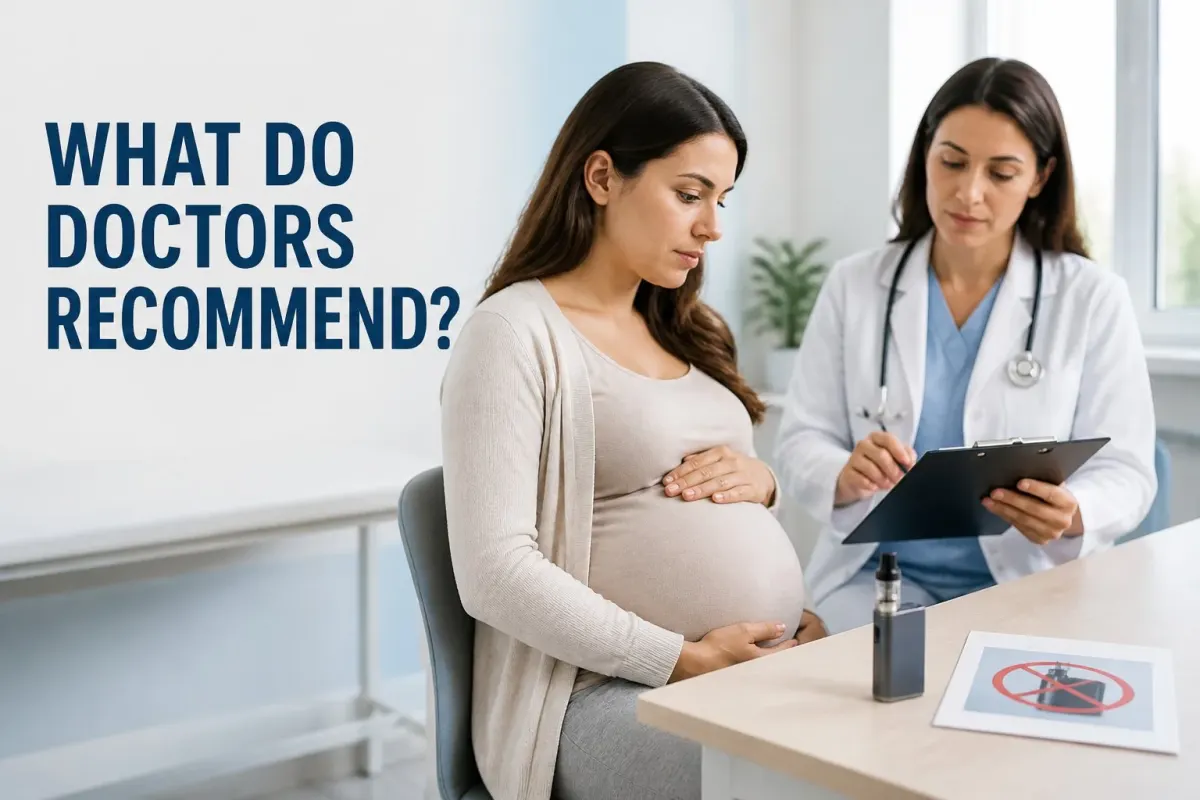
What Do Doctors Recommend?
One thing that stood out while researching this topic is how consistent the guidance is across major health organizations.
Although wording varies slightly, the message remains the same:
- Avoid vaping during pregnancy.
- Avoid nicotine exposure whenever possible.
- Seek professional help if quitting is difficult.
These recommendations aren't based on one single study. They're built on years of evidence examining nicotine exposure, fetal development, and pregnancy outcomes.
Common Myths About Vaping During Pregnancy
Let's clear up a few misconceptions I still see online.
| Myth | Reality |
|---|---|
| Vaping is just water vapor. | Vape aerosol contains far more than water, including solvents, flavorings, and ultrafine particles. |
| Nicotine-free vapes are completely safe. | There isn't enough evidence to confirm they're safe during pregnancy. |
| A few puffs won't matter. | Occasional exposure is unlikely to guarantee harm, but there's no known safe amount during pregnancy. |
| Vaping is approved for pregnant women. | No major medical organization recommends vaping during pregnancy. |
| Everyone who vapes during pregnancy has complications. | Not every pregnancy is affected the same way, but avoiding exposure is the safest option. |
Conclusioin
When I first started reviewing vape products, I expected to spend my days comparing flavors and testing batteries—not researching fetal development.
Yet questions like "Can you vape when pregnant?" remind me that vaping isn't just about devices or technology. Sometimes it's about making informed choices during one of life's most important moments.
If you've already vaped before realizing you were pregnant, don't panic—but do stop as soon as possible and talk to your healthcare provider.
Most importantly, don't let guilt keep you from seeking support. Every positive step you take from today onward can make a meaningful difference for both you and your baby.
FAQs
1. Can you vape during the first trimester?
No. Health organizations recommend avoiding vaping throughout the entire pregnancy, including the first trimester, when many of the baby's major organs begin developing.
2. Is vaping safer than smoking while pregnant?
Although vaping may expose users to fewer toxic chemicals than smoking, it is not considered safe during pregnancy. The safest choice is to avoid both cigarettes and e-cigarettes.
3. What should I do if I accidentally vaped before knowing I was pregnant?
Stop vaping as soon as you learn you're pregnant and discuss your vaping history with your healthcare provider. Accidental early exposure does not automatically mean your pregnancy will have complications.
4. Are nicotine-free disposable vapes safe during pregnancy?
No evidence currently confirms they are safe. Because they still produce aerosols containing various chemicals, healthcare professionals recommend avoiding them during pregnancy.
5. How can I quit vaping while pregnant?
Start by speaking with your obstetrician, midwife, or primary healthcare provider. They can recommend counseling, support programs, and, in some cases, supervised smoking cessation therapies that are appropriate during pregnancy.
References
[1] Centers for Disease Control and Prevention (CDC). E-Cigarettes and Pregnancy
[2] American College of Obstetricians and Gynecologists (ACOG). Tobacco, Alcohol, Drugs, and Pregnancy
[3] World Health Organization (WHO). Tobacco: E-cigarettes