




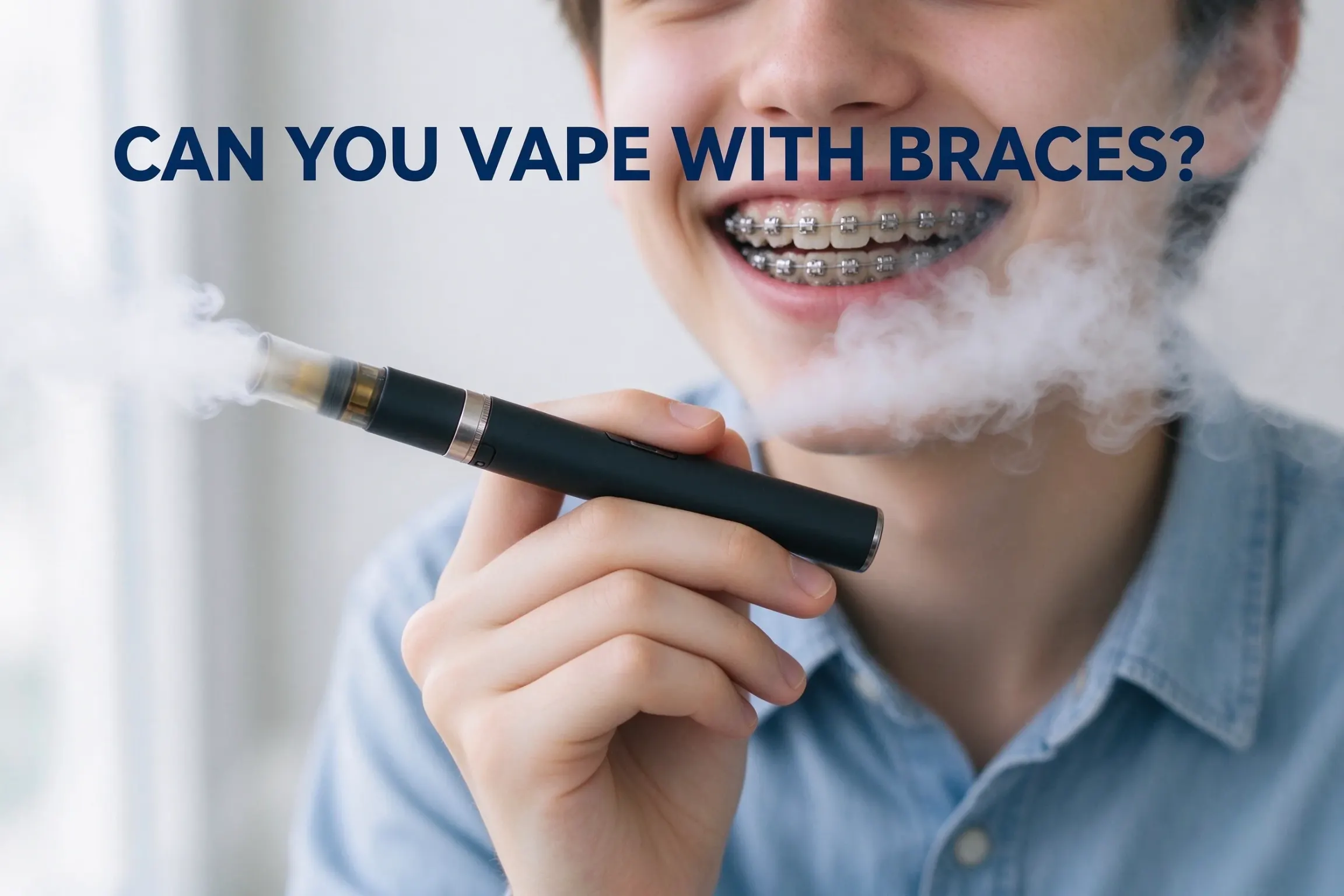
At SKE, we know that vaping questions don't stop just because you start orthodontic treatment. If you're wearing braces and using an e-cigarette, one question tends to come up sooner or later: can you vape with braces?
The short answer is yes—you can physically vape while wearing braces. But from SKE's perspective, the more important question isn't whether a vape can damage your brackets or wires. It's whether vaping could make it harder to maintain healthy teeth and gums while your orthodontic treatment is underway.
Braces already give plaque and food particles more places to hide, making good oral hygiene more challenging. Vaping can also be associated with dry mouth, gum irritation and other oral-health concerns. That's why the American Association of Orthodontists recommends avoiding vaping during orthodontic treatment.
As a vaping brand, SKE believes it's important to separate the facts from the myths. Using an SKE vape—or any other e-cigarette—doesn't mean your braces are going to melt or suddenly fall apart. However, vaping doesn't remove the need for careful brushing, flossing and regular orthodontic check-ups either.
In this guide, we'll look at what actually happens when you vape with braces, whether vaping can stain brackets, how it may affect your gums and teeth, and what orthodontists recommend if you currently vape.
Why Is Vaping a Problem With Braces?
There are several reasons orthodontists aren't exactly handing out vape coupons.
1. Vaping Can Cause Dry Mouth
One of the biggest concerns is dry mouth.
Vaping can reduce the protective effects of saliva, while ingredients commonly used in e-liquid can contribute to a dry feeling in the mouth. The AAO identifies dry mouth as one of the important oral-health concerns associated with vaping.
That matters because saliva does more than keep your mouth comfortable.
It helps wash away food particles, buffer acids and protect your teeth.
The CDC explains that saliva helps clear acids from the mouth and repair enamel. When that protective process isn't working properly, the risk of tooth decay increases.
And braces don't exactly make cleaning easier.
Brackets and wires create additional surfaces where plaque can accumulate. The CDC specifically lists wearing braces or other oral appliances among factors associated with a higher risk of cavities.
So you've got:
Braces → harder cleaning → more plaque traps
and potentially:
Vaping → dry mouth → less saliva protection
Put those together and your teeth have a fairly unpleasant little business meeting going on.
2. Your Gums May Not Appreciate It
Healthy gums are important during orthodontic treatment.
Vaping has been associated with changes in oral tissues, including gum inflammation. The American Dental Association notes that research into vaping and oral health is still developing, but existing evidence raises concerns about inflammation and other oral-health effects.
The AAO likewise warns about gum inflammation and other oral-health complications in people who vape while undergoing orthodontic treatment.
This matters because swollen or irritated gums can make brushing and flossing around brackets considerably more difficult.
And that's the vicious cycle you don't want:
Vaping → irritated/dry mouth → harder cleaning → more plaque → more irritation.
3. Cavities Around Brackets Are a Real Concern
Anyone who's had braces knows that brushing around every bracket can feel like trying to clean a tiny apartment with 14 rooms and one toothbrush.
Plaque accumulation around brackets can contribute to enamel demineralization and cavities.
The CDC says people wearing braces are at increased risk for cavities, while the AAO identifies tooth decay as one of the oral-health concerns associated with vaping.
One particularly annoying problem is the development of white spot lesions around brackets.
These are chalky-looking areas caused by mineral loss from enamel. They can remain visible even after the braces come off.
That's a pretty poor souvenir from an orthodontic treatment that was supposed to improve your smile.
4. Vaping May Affect Gum Healing
Nicotine is a vasoconstrictor, meaning it can narrow blood vessels.
Dental researchers and orthodontic specialists have therefore raised concerns about nicotine's potential effects on periodontal tissues and orthodontic tooth movement.
A review discussing e-cigarette use during orthodontic treatment has specifically raised concerns about nicotine's potential effects on periodontal health and the biological processes involved in orthodontically induced tooth movement. However, the authors also emphasized that the evidence base is still limited and more research is needed.
That's an important distinction.
You'll find websites claiming that vaping definitely adds months to every person's orthodontic treatment. The evidence doesn't support such a precise promise.
What we can reasonably say is that healthy gums and supporting tissues are important for orthodontic treatment, while vaping introduces factors that may work against good oral health.
That's enough reason for orthodontists to be cautious.
Does Vaping Damage Braces Directly?
Usually, not in the way people imagine.
Normal vaping isn't going to melt stainless-steel brackets or dissolve the orthodontic adhesive.
The more realistic concern is indirect:
- Plaque can become harder to manage.
- Dry mouth can reduce saliva's protective role.
- Gum irritation can make cleaning uncomfortable.
- Teeth may become discolored.
- Clear or ceramic components may be more visually susceptible to discoloration.
- Poor oral health can complicate orthodontic treatment.
The current evidence is much stronger for the oral-health effects than for claims that vape aerosol directly destroys orthodontic hardware. A 2026 orthodontic guide similarly notes that there isn't good evidence that ordinary vape aerosol directly melts brackets, bends wires or dissolves orthodontic adhesive.
So if you're worried about your bracket exploding because you took a puff, relax.
Your gums are the more important story.
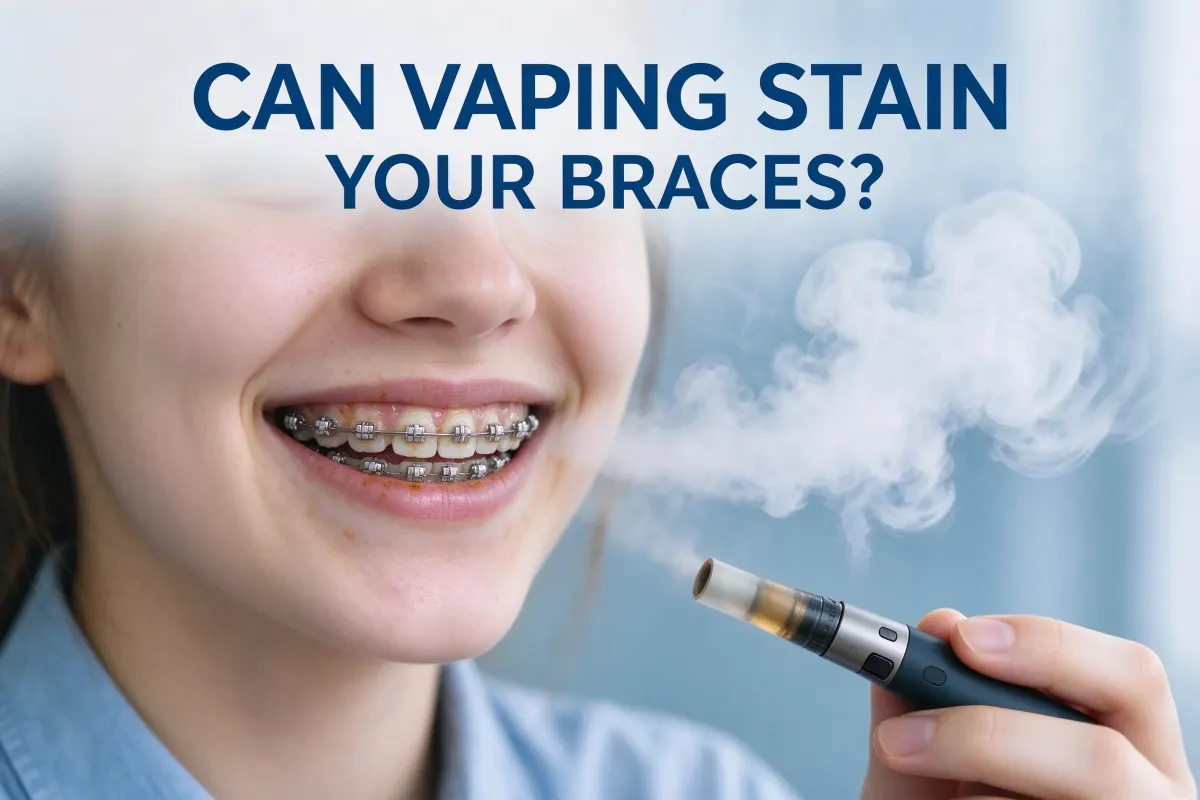
Can Vaping Stain Your Braces?
It can contribute to discoloration, particularly with clear or ceramic orthodontic appliances.
Traditional metal brackets are relatively resistant to discoloration, but the surrounding teeth and some clear orthodontic components can show staining more noticeably.
The exact degree depends on the device, e-liquid, frequency of use, oral hygiene and other factors.
It's also worth remembering that tooth discoloration isn't necessarily caused by nicotine alone. Different e-liquids contain different flavorings and ingredients, and the long-term effects of many formulations on teeth aren't completely understood.
So I wouldn't tell anyone that switching to a particular flavor magically makes vaping "brace-safe."
It doesn't.
What About Clear Braces or Ceramic Braces?
This is where appearance becomes an even bigger concern.
Ceramic and clear brackets are designed to be less noticeable than metal braces. That's their whole selling point.
If they become discolored, you lose part of that advantage.
Some orthodontic practices specifically warn that repeated vaping can discolor clear or ceramic brackets.
And there's another issue: your teeth may not all experience discoloration evenly.
The areas around brackets are exposed while the bracket-covered enamel is relatively protected from direct exposure. Once the braces come off, differences in tooth color can become more noticeable.
Again, the exact outcome varies from person to person.
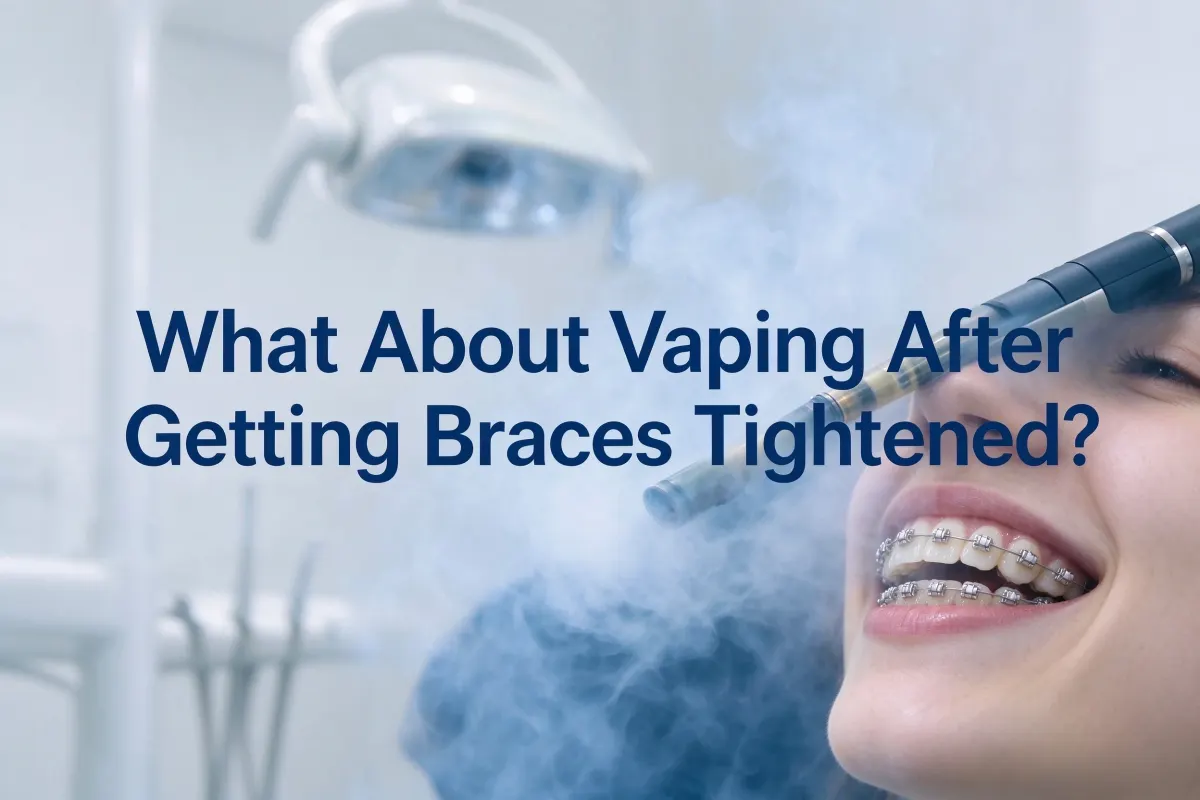
What About Vaping After Getting Braces Tightened?
I'd be particularly cautious after an adjustment.
Your teeth and surrounding tissues may already feel tender after your orthodontist changes the wire or applies new forces.
Vaping can add another source of irritation, particularly if your mouth is already dry or sore.
There isn't a universally established medical rule saying you must wait a specific number of hours after every adjustment before vaping. Your orthodontist's instructions should take priority.
If your mouth is sore, bleeding, unusually swollen or irritated after an adjustment, that's a good time to give vaping a miss and contact your orthodontist if symptoms don't settle.
Is Vaping Worse With Braces Than Without Braces?
From an oral-hygiene perspective, there's more at stake when you're wearing braces.
Without braces, you still have the potential oral-health concerns associated with vaping.
With braces, you also have:
- More surfaces where plaque can collect
- More difficult brushing and flossing
- Increased difficulty cleaning around brackets
- Greater concern about enamel changes around brackets
- Additional challenges if your gums become swollen
- The need to keep orthodontic hardware clean and functioning properly
The CDC already recognizes braces as a cavity-risk factor because they can make cleaning more difficult.
So vaping doesn't need to physically damage a bracket to make orthodontic life more complicated.
What If I Vape and I'm Not Ready to Quit?
This is where I'll avoid pretending that everyone can simply wake up tomorrow and stop nicotine.
If you currently vape, the healthiest option for your teeth, gums and orthodontic treatment is to stop.
But if you're struggling to do that, don't use "I can't quit yet" as an excuse to ignore your oral health.
At minimum, take your orthodontic hygiene seriously.
1. Brush carefully
Brush twice a day with fluoride toothpaste, paying particular attention to the areas around each bracket.
The CDC recommends brushing twice daily with fluoride toothpaste and cleaning between teeth as part of routine oral care.
Your orthodontist may recommend brushing more frequently depending on your situation.
2. Clean between your teeth
Traditional floss can be awkward with braces, so interdental brushes, floss threaders or a water flosser may make the job easier.
The objective is simple:
Don't leave plaque camping around your brackets.
3. Drink water regularly
If vaping leaves your mouth feeling dry, staying hydrated can help with comfort and saliva flow.
But don't mistake drinking water for a magic reset button.
It doesn't make vaping harmless.
4. Don't ignore bleeding gums
Bleeding during brushing isn't something you should simply accept as "part of having braces."
Persistent bleeding, swelling, pain, gum recession or unusual sensitivity should be discussed with your dentist or orthodontist.
5. Tell your orthodontist that you vape
This might be the most uncomfortable piece of advice in the article.
Do it anyway.
Your orthodontist isn't there to judge your lifestyle. They need accurate information to provide appropriate care.
Interestingly, a 2026 survey of 140 orthodontic patients found that around one in four had tried vaping and around one in seven were current users. The researchers also found that very few had discussed vaping with their orthodontist. Importantly, among users who received advice, three out of four reported reducing or stopping their vaping.
That suggests a surprisingly simple intervention: actually having the conversation.
Conclusion
If you have braces, you can physically vape, but that doesn't mean it's a good idea. Vaping may contribute to dry mouth, gum irritation, plaque buildup, tooth decay, and discoloration—problems that can be harder to manage while wearing braces. The biggest concern isn't that vaping will melt or break your braces, but that it may make maintaining healthy teeth and gums during orthodontic treatment more difficult.
For the best results, orthodontists generally recommend avoiding vaping and maintaining excellent oral hygiene throughout treatment.
FAQs
1. Can you vape with braces on your teeth?
Yes, you can physically vape while wearing braces, but orthodontists generally recommend avoiding it. Vaping can contribute to dry mouth, gum inflammation, tooth decay and other oral-health problems that are particularly inconvenient during orthodontic treatment.
2. Does vaping damage braces?
Vaping does not normally directly melt or break metal brackets and wires. The greater concern is indirect: dry mouth, plaque accumulation, gum irritation, staining and other oral-health problems can make orthodontic treatment more difficult.
3. Can vaping stain braces?
It can contribute to discoloration, particularly with clear or ceramic brackets and other light-colored orthodontic components. Teeth may also become discolored, making the contrast around brackets more noticeable.
4. Can you vape after getting braces tightened?
There isn't a universal waiting period that applies to everyone. However, your mouth may be more sensitive immediately after an adjustment, so avoiding vaping while your tissues are sore or irritated is sensible. Follow your orthodontist's specific instructions.
5. Can you vape with Invisalign?
Vaping while wearing clear aligners is generally a bad idea because the aerosol can contact the aligner and teeth, potentially contributing to staining, residue and oral-health problems. Follow your orthodontist's instructions about removing and cleaning your aligners. More importantly, removing an aligner doesn't eliminate the oral-health concerns associated with vaping.
References
[1] American Association of Orthodontists (AAO) — The Impact and Hidden Consequences of Vaping on Oral Health
[2] Centers for Disease Control and Prevention (CDC) — About Cavities (Tooth Decay)
[3] American Dental Association (ADA) — Tobacco Use and Cessation