




If you vape and have ever looked in the mirror after brushing your teeth and thought, “Why do my gums look like that?”, you are definitely not alone.
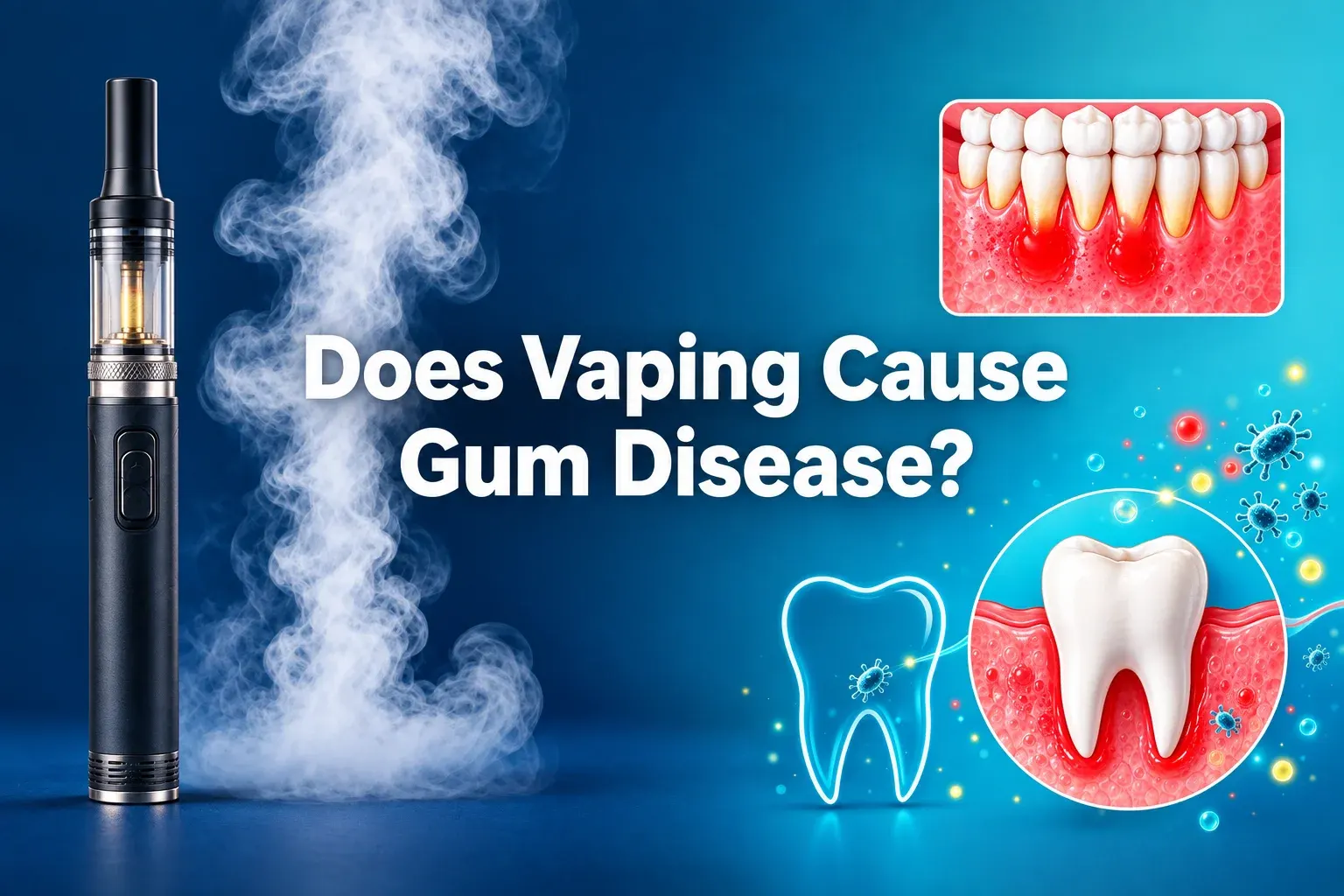
One question I see more and more is: does vaping cause gum disease?
The honest answer is a little more complicated than a simple yes or no.
Current research suggests that vaping may increase the risk of gum inflammation and periodontal problems, particularly compared with not using nicotine products. Studies have linked e-cigarette use with changes in oral bacteria, plaque accumulation, inflammation and some measures of periodontal damage.
But there is an important catch: researchers are still working out exactly how much vaping itself contributes to gum disease. Many studies are observational, and plenty of vapers have previously smoked cigarettes, which makes the two effects difficult to separate.
So, let's get into what we actually know.
What Is Gum Disease?
“Gum disease” is a broad term covering problems affecting the tissues around your teeth.
The first stage is usually gingivitis.
Your gums may become:
- Red or swollen
- Tender
- More sensitive
- Prone to bleeding when brushing or flossing
- More likely to produce bad breath
The good news is that gingivitis can generally be reversed with appropriate oral hygiene and professional dental care.
If inflammation continues, however, it can progress to periodontitis. That's the more serious form of periodontal disease.
Periodontitis can cause the gums to pull away from the teeth, creating periodontal pockets. Over time, the infection and inflammation can contribute to destruction of the supporting tissue and bone around teeth.
That's when things get considerably less funny.
Untreated periodontitis can eventually contribute to loose teeth and tooth loss. Mayo Clinic identifies vaping among recreational exposures associated with increased periodontitis risk, alongside established risk factors such as smoking, poor oral hygiene and certain medical conditions.
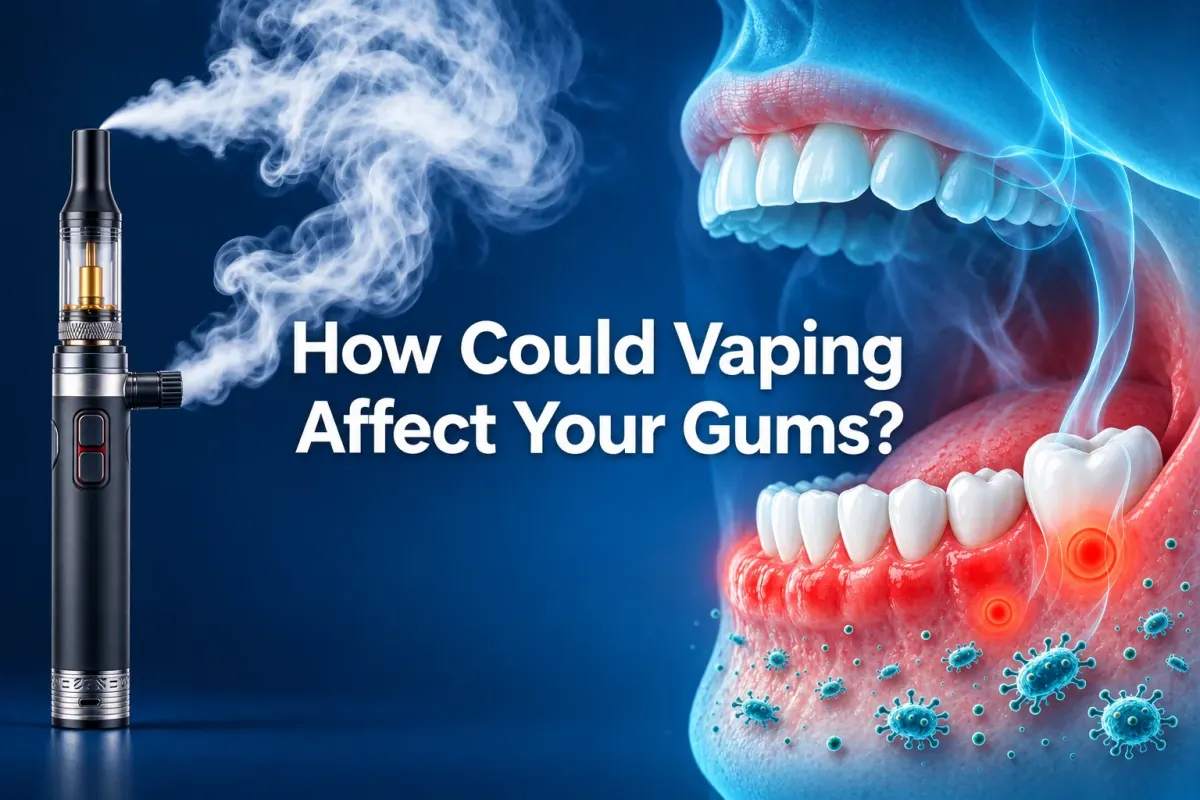
How Could Vaping Affect Your Gums?
There are several possible mechanisms researchers are investigating.
1. Vaping May Change the Bacteria in Your Mouth
Your mouth is home to an enormous community of microorganisms.
Most of them aren't interested in ruining your day. In fact, a healthy oral microbiome is part of maintaining a healthy mouth.
Vaping appears capable of changing that microbial environment.
A 2026 systematic review examining the oral microbiota of e-cigarette users included 12 human studies. It found that e-cigarette users had distinct microbial communities compared with never-smokers and current smokers, although the evidence was rated very low certainty because most studies were cross-sectional and differed substantially in their methods.
That's important because periodontal disease isn't simply a matter of “dirty teeth.”
It's an interaction between bacteria, the immune system and the tissues surrounding your teeth.
If vaping changes that environment in an unfavorable direction, it could potentially make periodontal problems easier to develop or harder to control.
2. Nicotine Can Affect Blood Flow
If your vape contains nicotine, there is another piece of the puzzle.
Nicotine is a vasoconstrictor, meaning it can narrow blood vessels.
Healthy gums need blood flow to deliver oxygen, nutrients and immune cells. Reduced circulation can interfere with the body's ability to respond to irritation and repair damaged tissue.
This is one reason nicotine use is particularly relevant when talking about gum health.
And there's an annoying twist.
Nicotine can also influence how much your gums bleed.
Bleeding gums are one of the classic warning signs of gingivitis. If that warning signal is reduced, someone might look at their gums and assume everything is fine when inflammation is actually present.
That doesn't mean “no bleeding = gum health is perfect.”
It definitely doesn't.
Dental professionals have been raising concerns about the relationship between vaping, inflammation and changes in bleeding response. The American Dental Association has highlighted increased gingival inflammation, delayed wound healing and possible links with periodontitis among oral effects being investigated in people who vape.
3. Vaping Can Contribute to Dry Mouth
This one is much easier to notice.
If your mouth constantly feels like you've swallowed a handful of cotton balls, vaping could be part of the reason.
Vaping has been associated with oral dryness and irritation. Reduced saliva matters because saliva isn't just there to help you swallow your lunch.
It helps:
- Wash away food particles
- Buffer acids
- Protect teeth
- Support the oral microbiome
- Keep oral tissues lubricated
Less saliva can create a friendlier environment for plaque and bacteria.
The Oral Health Foundation also lists dry mouth, increased risk of tooth decay and mouth infections among concerns associated with vaping.
4. Vape Aerosol Can Irritate Oral Tissues
And no, vape aerosol isn't simply harmless water vapor.
E-cigarettes heat e-liquid and generate an aerosol that can contain nicotine, flavoring chemicals, propylene glycol, vegetable glycerin and other substances produced or present during heating.
The CDC notes that e-cigarette aerosol can contain potentially harmful substances and that scientists are still learning about the short- and long-term health consequences of vaping.
For the mouth, that means your gums and other oral tissues are exposed to the aerosol every time you vape.
Repeated irritation isn't exactly what your gums ordered.
What Are the Signs of Gum Disease?
If you're a regular vaper, these are the symptoms I'd pay attention to:
- Persistent bad breath
- Red or swollen gums
- Tender gums
- Bleeding when brushing or flossing
- Receding gums
- Increased tooth sensitivity
- Pus around the gums
- Loose teeth
- Changes in how your teeth fit together
- Pain when chewing
One particularly important point: don't wait for dramatic pain.
Periodontal disease can develop without causing much pain in its early stages.
That's why regular dental examinations matter.
The CDC notes that the mouth can be one of the first places where adverse effects from tobacco use become apparent and emphasizes the role of dental professionals in identifying and addressing oral health problems.
Does Vaping Cause Gingivitis?
It may increase the risk.
Gingivitis is the early stage of gum disease and is characterized by inflammation around the gums.
Research has reported higher levels of gingival inflammation and other unfavorable periodontal measurements among e-cigarette users compared with non-users.
A 2024 review of oral health evidence reported associations between electronic nicotine delivery systems and gingivitis, along with other oral conditions.
The important point is that vaping doesn't operate in isolation.
Your risk also depends on things such as:
- How often you vape
- How long you've been vaping
- Whether your vape contains nicotine
- Your brushing and flossing habits
- Existing gum disease
- Diet
- Smoking history
- Diabetes and other health conditions
- How often you visit the dentist
So if someone vapes twice a day and someone else chain-vapes from breakfast until bedtime, treating them as identical “vapers” isn't particularly useful scientifically.
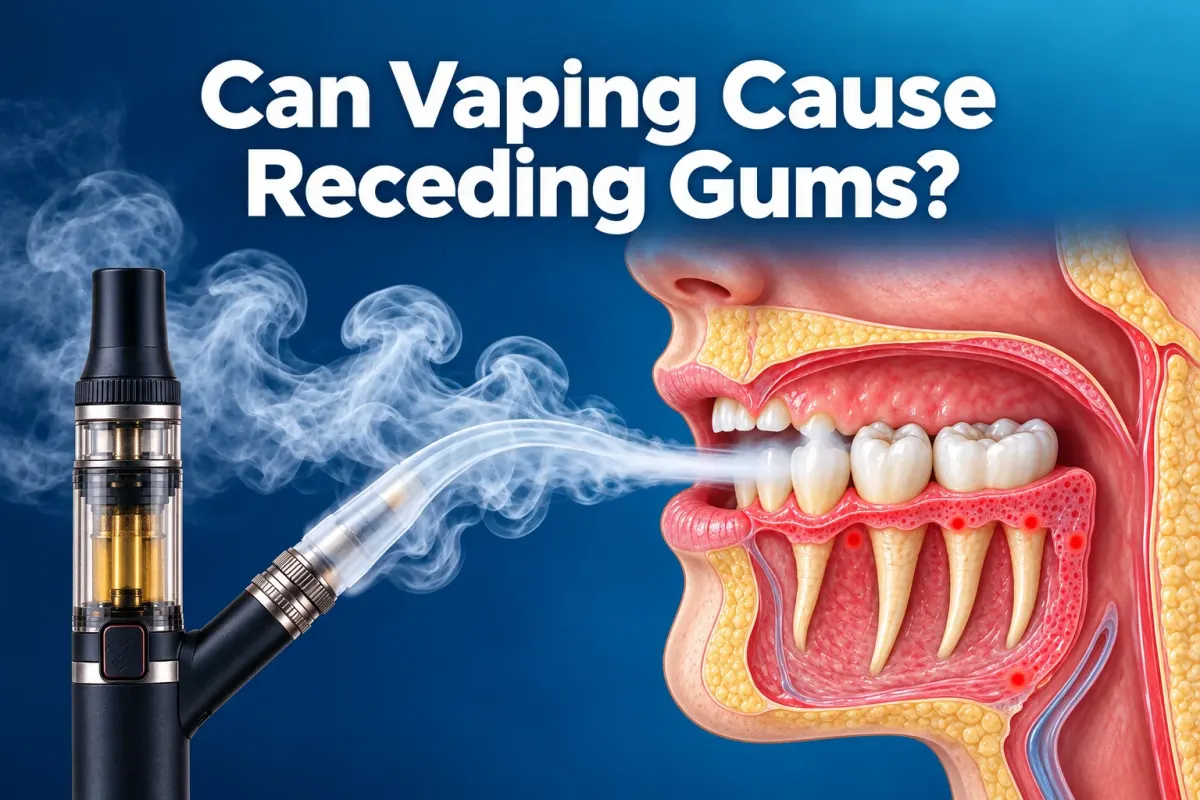
Can Vaping Cause Receding Gums?
There is reason to be concerned, but this is another area where we should avoid overstating the evidence.
Gum recession means the gum tissue moves away from the tooth, exposing more of the tooth surface.
Periodontal inflammation can contribute to tissue destruction, and nicotine can affect circulation and healing.
Research into e-cigarettes has reported periodontal changes that may be relevant to recession and tissue attachment.
However, there isn't enough long-term evidence to say that vaping directly causes gum recession in every user.
Other factors can cause or contribute to recession, including aggressive tooth brushing, periodontal disease, naturally thin gum tissue, orthodontic treatment and mechanical trauma.
So if your gums suddenly look lower than they used to, don't automatically blame your vape. Get a dentist to take a look.
What About Vaping Compared With Smoking?
This is where online discussions often go completely off the rails.
Some people argue:
“Vaping is safer than smoking, so it's harmless.”
Others respond:
“Vaping damages your gums, so it's just as bad as smoking.”
Neither statement properly reflects the evidence.
Cigarette smoking is a well-established major risk factor for periodontal disease. Vaping is newer, so researchers don't have anything close to the same decades-long evidence base.
Current reviews generally suggest that periodontal effects from vaping may be less severe than conventional cigarette smoking in some respects, while still appearing less favorable than not using nicotine products.
The 2024 periodontal scoping review specifically concluded that the effects observed with vaping were generally less remarkable than those associated with cigarette smoking, while still identifying potential adverse effects on periodontal health.
A 2026 review similarly found that e-cigarette users often had more favorable periodontal clinical parameters than cigarette smokers, but poorer outcomes than never-smokers in several studies.
So if you're a smoker considering switching completely to vaping, the comparison isn't the same as comparing vaping with doing nothing.
That's an important distinction.
The CDC likewise states that e-cigarettes are not safe tobacco products, while noting that they may potentially benefit adults who smoke if they are used as a complete substitute for smoked tobacco products.
How Can Vapers Protect Their Gums?
If you're not ready to quit vaping tomorrow morning, there are still practical things you can do.
1. Brush twice a day
Use fluoride toothpaste and brush for about two minutes.
No need to attack your gums like you're scrubbing burnt food off a frying pan.
Gentle and consistent wins.
2. Clean between your teeth
Floss or use another appropriate interdental cleaner every day.
A toothbrush can't reach everything.
3. Drink more water
If vaping leaves your mouth dry, staying hydrated can help with the uncomfortable cotton-mouth feeling.
4. Don't ignore bleeding or swelling
If your gums repeatedly bleed, swell or become painful, get them checked.
And if you're vaping, tell your dentist.
That's useful information for them, not a confession.
5. Keep regular dental appointments
A professional cleaning can remove hardened tartar that you can't simply brush away at home.
6. Consider reducing or stopping vaping
From a gum-health perspective, removing the exposure is the most straightforward way to eliminate vaping as a potential contributor.
If you're currently using vaping as an alternative to smoking, however, the situation is more complicated. Completely switching from cigarettes to vaping is different from continuing to smoke while also vaping.
If quitting nicotine is your goal, a doctor, dentist or other healthcare professional can help you choose an evidence-based approach.
My Take: Should Vapers Be Worried About Their Gums?
I wouldn't panic.
But I also wouldn't ignore it.
The current evidence gives us enough reason to take the connection between vaping and periodontal health seriously. Research has repeatedly identified changes involving inflammation, plaque, oral bacteria and periodontal measurements.
At the same time, saying “vaping definitely causes gum disease” goes further than the evidence currently allows.
For me, the sensible takeaway is much simpler:
If you don't use nicotine, don't start vaping for the sake of it. If you do vape, don't assume your gums are protected simply because you aren't smoking cigarettes. And if you also smoke, don't treat vaping plus smoking as some magical health loophole.
Your gums aren't particularly interested in marketing slogans.
They just want good circulation, a healthy oral environment, regular cleaning and fewer things irritating them.
And, frankly, they have a point.
FAQs
1. Does vaping cause gum disease?
Vaping is associated with an increased risk of gingivitis and poorer periodontal health compared with non-use, but researchers have not established that vaping alone inevitably causes gum disease. Current evidence points toward possible effects involving inflammation, oral bacteria, plaque and periodontal tissues.
2. Can vaping cause gingivitis?
Yes, research has reported an association between vaping and gingival inflammation. Vaping may contribute through several mechanisms, including changes to the oral microbiome, dry mouth and exposure to aerosol constituents.
3. Can vaping make your gums recede?
Vaping may contribute to conditions associated with periodontal tissue damage, particularly when nicotine is involved, but there isn't enough long-term evidence to say that vaping directly causes gum recession in every user. Gum recession also has several other possible causes.
4. Is vaping better for your gums than smoking?
Current research generally finds more severe periodontal effects among conventional cigarette smokers than e-cigarette users, but vaping still appears to carry oral-health risks compared with not smoking or vaping. The two should not be treated as equivalent exposures.
5. Will my gums get better if I stop vaping?
Stopping vaping removes a potential source of irritation and nicotine exposure, but whether existing gum disease improves depends on how advanced it is and what other factors are involved. Early gingivitis can often be reversed with good oral hygiene and professional care, while periodontitis can cause permanent damage and requires dental treatment.
References
[1] American Dental Association — Tobacco Use and Cessation
[2] National Library of Medicine — The impact of electronic and conventional cigarettes on periodontal health-a systematic review and meta-analysis