

If you vape and have recently looked in the mirror and thought, “Were my teeth always that color?”, you're not alone.
“Does vaping stain teeth?” is one of those questions that sounds like it should have a simple yes-or-no answer. Unfortunately, teeth, nicotine and e-cigarette aerosol don't read instruction manuals.
The short answer is: yes, vaping may contribute to tooth discoloration, but the evidence suggests the staining is generally less pronounced than with traditional cigarette smoking. The important word here is may. Research on vaping and dental staining is still limited, and researchers haven't established that every vape, flavor or nicotine formulation will stain teeth in the same way.
A 2023 systematic review and meta-analysis examined 27 studies and found limited, relatively low-quality evidence that e-cigarettes can stain dental tissues and dental materials. However, the staining was generally less intense than that associated with conventional cigarettes.
So, if you're hoping vaping is completely invisible to your smile, I wouldn't make that bet.
Why Could Vaping Discolor Teeth?
There isn't one single culprit.
Several factors may contribute to discoloration, including the composition of the e-liquid, aerosol characteristics, nicotine, flavoring compounds and how frequently someone vapes.
1. Nicotine May Play a Role
Nicotine is often blamed for yellow teeth, but the science is more complicated than that.
The systematic review I mentioned earlier found some evidence that nicotine itself may contribute to dental staining, but the researchers said the evidence was limited. They also identified other compounds associated with tobacco staining, suggesting that cigarette discoloration can't simply be blamed on nicotine alone.
That's an important distinction.
If nicotine alone were responsible for all tobacco staining, we'd expect every nicotine-containing product to behave similarly. Real-world evidence doesn't support such a simple explanation.
2. E-Liquid Ingredients Matter
Not all vape liquids are chemically identical.
Flavorings and other components can affect the characteristics of the aerosol. Research reviewed by dental-health organizations has also raised concerns about how certain e-cigarette aerosols interact with tooth surfaces and dental plaque.
The American Dental Association's consumer resource on vaping notes that some flavorings may contain sugar and that vaping aerosols can contribute to conditions favorable to plaque formation and tooth decay.
The FDA similarly warns that flavored and sugary e-liquids may make some oral-health effects worse.
That doesn't mean a fruit-flavored vape automatically turns your teeth orange.
It means the formulation matters, and researchers still need better long-term studies to determine exactly which ingredients have the greatest effect.
3. The Aerosol Can Stick to Teeth
This is probably the least glamorous part of vaping.
Your vape aerosol doesn't magically disappear the instant you exhale.
Some aerosol can come into contact with surfaces inside your mouth. The FDA specifically notes that e-cigarette aerosols are likely to stick to exposed surfaces such as teeth, gums, tongue and dental implants.
The American Dental Association also reports that vaping aerosols can interact with tooth surfaces and potentially encourage bacterial attachment.
Over time, anything that repeatedly sits on your teeth can become more relevant—especially when combined with inadequate brushing, plaque buildup, coffee, tea, red wine or other common sources of staining.
Your teeth, unfortunately, don't know which stain came from a vape and which came from your morning coffee.
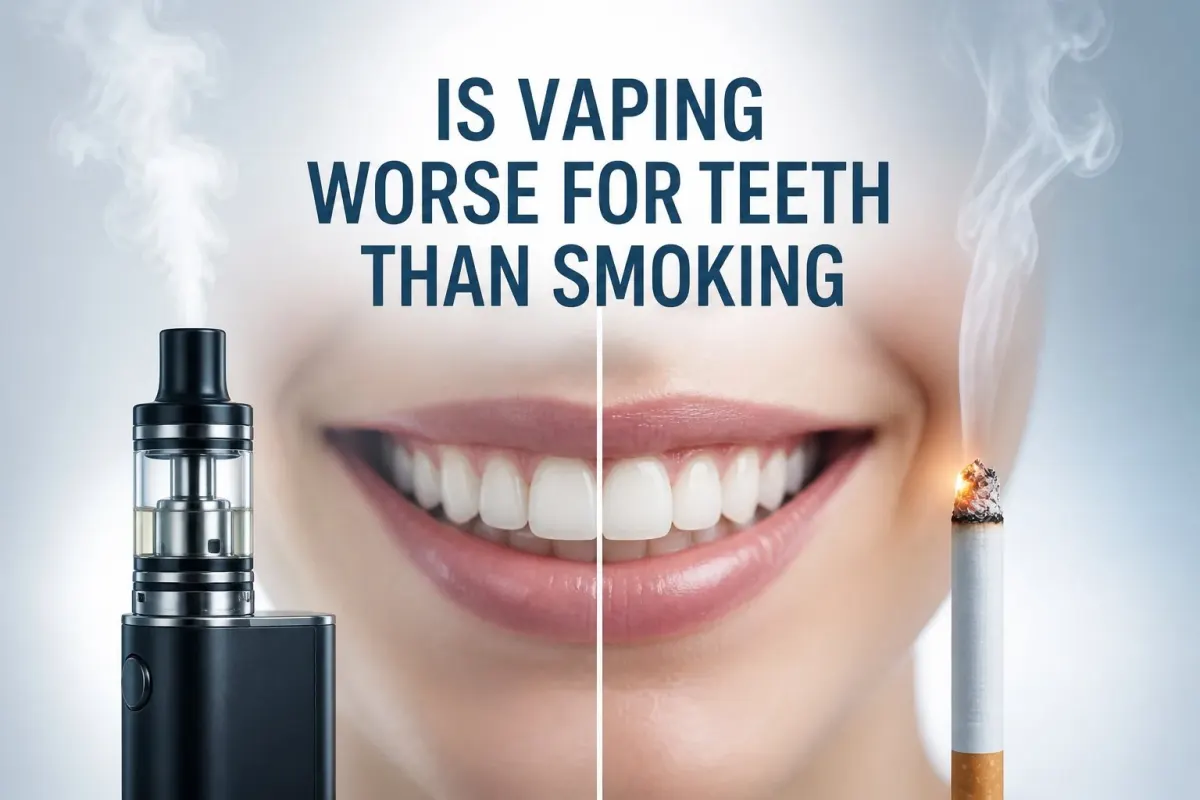
Is Vaping Worse for Teeth Than Smoking?
Based specifically on current evidence about staining, smoking appears to be worse.
The systematic review of tobacco and nicotine products found strong evidence that conventional tobacco causes staining of enamel, dentine and dental materials. Evidence for e-cigarette staining was much more limited, and the observed effect was generally lower than with cigarettes.
That's consistent with what we'd expect from the chemistry of combustion.
Cigarettes produce smoke containing tar and many combustion products. Vapes produce an aerosol without burning tobacco.
But—and this is where I would put the giant asterisk—“less staining than cigarettes” does not mean “no oral-health effects.”
The FDA says e-cigarettes may negatively affect oral health and notes possible links with periodontal disease, oral irritation, dry mouth and other symptoms.
Recent systematic reviews are also finding that vaping may affect periodontal health and the oral microbiome, although the quality and consistency of the available evidence vary. A 2025 systematic review and meta-analysis included 40 eligible studies and found differences in plaque levels and inflammatory or microbial markers among e-cigarette users, while emphasizing the complexity of the evidence.
So I wouldn't use “less staining than smoking” as an argument that vaping is good for your teeth.
It isn't.
Does Nicotine-Free Vaping Stain Teeth?
This is where things get interesting.
Nicotine-free vaping may remove one potential contributor, but it doesn't prove that the aerosol itself cannot affect tooth color.
The evidence on vaping-related staining is not strong enough to say that nicotine is the only cause.
The systematic review found some evidence linking nicotine with staining, but also suggested that e-liquid composition may influence discoloration.
So switching to nicotine-free liquid shouldn't be treated as a guaranteed teeth-whitening strategy.
And there's another important point: nicotine-free does not mean risk-free.
The aerosol still contains other substances, and vaping can still affect the mouth.
Can Vaping Cause Tooth Decay?
Potentially, although the evidence is still developing.
The American Dental Association reports that some e-cigarette aerosols can increase biofilm formation and promote bacterial attachment to tooth surfaces.
The FDA similarly says aerosol can stick to teeth and that flavored and sugary e-liquids may make bacterial adhesion and oral infections more likely.
However, the broader scientific picture isn't completely settled.
A recent systematic review and meta-analysis examining the association between electronic nicotine delivery systems and dental caries found possible associations in some studies, but concluded that the overall certainty of evidence was very low. Its quantitative analysis did not find a significant difference in caries history between ENDS users and non-users.
That's why I prefer saying “vaping may contribute to oral-health problems” rather than “vaping causes cavities.”
The latter is much more definitive than the evidence currently allows.
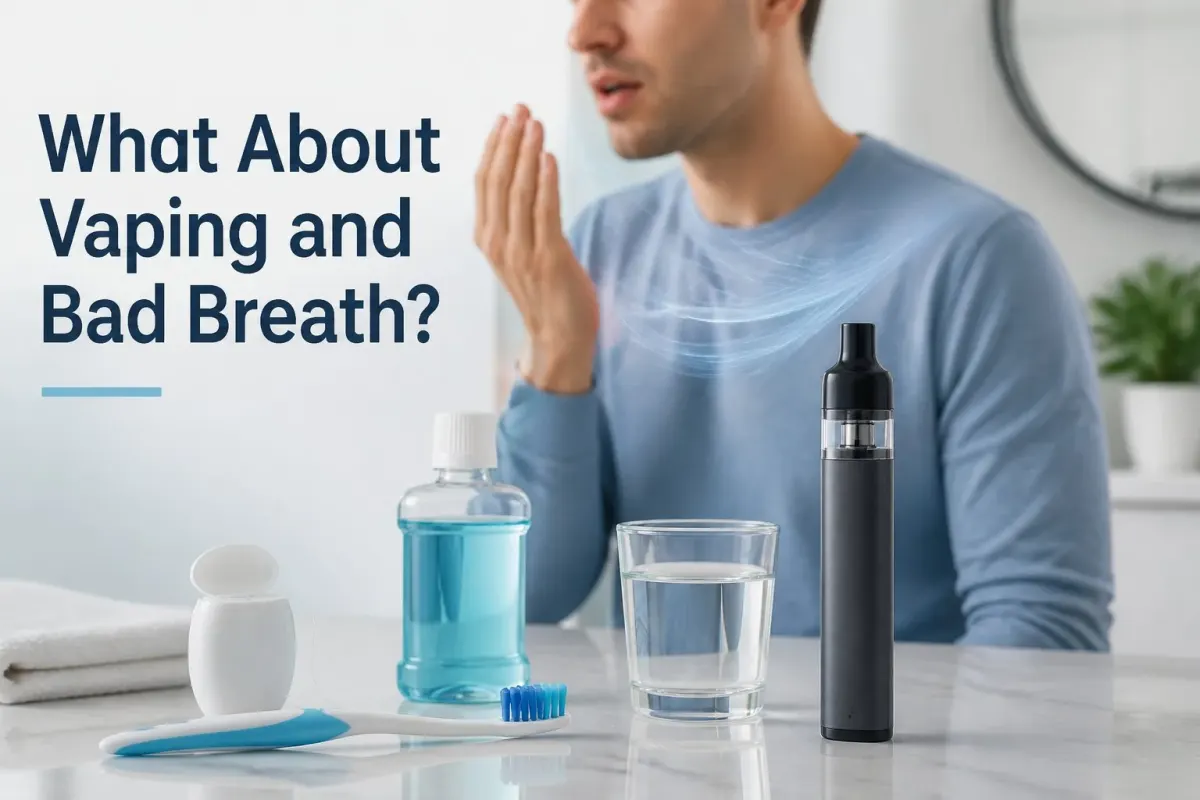
What About Vaping and Bad Breath?
This one has a little more practical relevance.
The FDA lists dry mouth, irritation, bad taste and bad breath among symptoms reported by people who use e-cigarettes or are directly exposed to e-liquid.
Dry mouth matters because saliva is one of your mouth's natural defense systems.
If your mouth stays dry, plaque and bacteria can become more troublesome.
And if you're constantly vaping throughout the day, you're repeatedly exposing your mouth to aerosol rather than giving it much of a break.
That's not exactly the oral equivalent of a spa day.
Does Vaping Stain Dental Fillings and Veneers?
Potentially, yes—and this is an area people often overlook.
The 2023 systematic review found evidence that e-cigarette exposure can discolor not only natural dental tissues but also dental materials, including resin composites and ceramics. However, the evidence was limited and the degree of discoloration varied depending on the material.
This matters because someone may have relatively white natural teeth but notice discoloration around fillings or cosmetic dental work.
Composite resin can behave differently from enamel.
So if you've invested heavily in cosmetic dentistry, I wouldn't assume that vaping has no effect simply because your natural teeth look fine.
How Can You Reduce Vaping-Related Tooth Staining?
If you vape and aren't ready to stop, you can still take basic steps to protect your oral health.
1. Brush Twice a Day
The boring answer is often the useful answer.
Brush twice daily with fluoride toothpaste and clean between your teeth regularly.
This helps remove plaque and surface deposits before they become a bigger problem.
2. Drink Water
Water is your friend.
Drinking water throughout the day can help keep your mouth from becoming excessively dry and helps rinse away some substances after eating or vaping.
It isn't a magical vape detox.
It's simply good oral hygiene.
3. Don't Ignore Dental Cleanings
If you're noticing yellowing, brown spots, persistent bad breath or gum bleeding, talk to a dentist.
A professional cleaning can remove deposits that normal brushing can't.
And if the discoloration isn't ordinary surface staining, a dentist can tell you whether you're dealing with enamel changes, decay, gum problems or something else.
4. Be Careful With DIY Whitening
This is where people sometimes go from “my teeth look a little yellow” to “I have accidentally sandblasted my enamel.”
Don't overuse abrasive whitening products or aggressive home remedies.
If you want significant whitening, discuss the options with a dental professional.
5. Consider the Bigger Picture
If you're a smoker who has switched completely to vaping, the staining comparison is different from someone who has never smoked and has started vaping.
And if your goal is protecting your oral health as much as possible, quitting tobacco and nicotine altogether remains the cleaner option.
Conclusion
Vaping may stain teeth, but current evidence suggests the discoloration is generally less severe than that caused by traditional cigarettes. Nicotine, e-liquid ingredients, flavorings, and aerosol residue may all contribute to staining, while vaping can also be associated with dry mouth, plaque buildup, irritation, and other oral-health concerns.
That said, research on vaping and dental staining is still limited, so it would be wrong to claim that vaping inevitably turns teeth yellow. Good oral hygiene, drinking water, regular dental checkups, and reducing or quitting vaping can help protect your smile.
FAQs
1. Does vaping make your teeth yellow?
It can contribute to tooth discoloration, but the evidence is limited. Research suggests e-cigarettes may stain dental tissues and dental materials, although generally less intensely than conventional cigarettes.
2. Is vaping worse for teeth than smoking?
For tooth staining specifically, traditional cigarette smoking appears to have a stronger effect. However, vaping can still expose the mouth to substances that may contribute to plaque, dryness, irritation and other oral-health problems.
3. Can you whiten teeth after vaping?
Professional dental cleaning can remove surface deposits, while professional or dentist-supervised whitening can address certain types of discoloration. However, whitening doesn't eliminate the underlying oral-health effects of vaping.
4. Does nicotine-free vape stain teeth?
Possibly. Removing nicotine may eliminate one potential contributor to staining, but research suggests that other components of e-liquid and aerosol may also influence discoloration. Therefore, nicotine-free vaping shouldn't be considered completely stain-free.
5. How do I prevent vaping from staining my teeth?
Good oral hygiene is the simplest place to start: brush twice daily with fluoride toothpaste, clean between your teeth, drink water and maintain regular dental checkups. If you're concerned about persistent discoloration, ask your dentist rather than relying exclusively on DIY whitening products.
References
[1] U.S. FDA — How Tobacco Use Affects Oral Health
[2] American Dental Association — Vaping